
November 4, 2026
How to Ask for More Time to Consider a Job Offer
If you need more time to consider a job offer, thank the employer promptly, confirm the date they need your answer, and ask whether they can extend it to a specific day. Keep the request positive but honest: express interest only if you mean it, avoid wording that sounds like acceptance, and do not assume the employer will agree. If they grant an extension, confirm the final deadline and follow through on that date.
Employers' response windows vary, and the offer email or letter may give a specific timeframe, according to Indeed's job-offer guidance. So start with the deadline you were actually given rather than assuming a generic number of days. Cornell Career Services recommends naming a specific decision date and keeping it; Harvard Law School's OPIA also advises asking when the employer needs an answer and clarifying the final cutoff if an extension is granted. These are communication recommendations, not a guarantee that an employer can extend a deadline.
First, identify what you actually need
Before writing, separate three different situations. They call for slightly different messages:
- You do not know the response deadline. Ask when they need your decision before requesting extra time. An offer email may already state the date, so check it first.
- You know the deadline but need longer. Make one specific request, such as “Would it be possible to respond by Thursday, November 12?” Use the actual date, not “a few more days.”
- You need an answer about the offer itself. Ask the question directly—about a responsibility, schedule, start date, or written term—instead of disguising it as a request for time. If several details need discussion, ask for a short conversation.
Indeed's current guidance also separates confirming the deadline, requesting additional time, and asking relevant offer questions. Its examples are useful starting points, but your request should reflect the actual offer and your real reason.
A simple structure for asking
A useful request can usually fit in four parts:
- Thank them for the offer. Name the role or opportunity so the message has context.
- State that you are reviewing it. Do not overstate enthusiasm or certainty. “I’m glad to have received the offer and am reviewing the details” is safer than “I can’t wait to join” if you have not decided.
- Ask for a concrete date. Specify the date by which you can give a considered answer. Choose a date you can realistically meet, not the latest date you hope they will accept.
- Invite a clear response. Ask whether the date is workable. If it is not, request the employer’s preferred final deadline so you can decide what to do next.
Send the request as soon as you know you need more time—not at the last moment; UW–Madison's offer guidance also recommends raising a needed extension early and contacting the person or HR representative who made the offer. If the offer came by phone, you can ask about the timeline during the call, then follow up in writing with the date you discussed. The same guide suggests using email to arrange a conversation when the offer terms need discussion.
Copyable examples
Replace every bracketed detail with something true. The examples below are fictional and do not imply that an employer will grant the request.
When the deadline was not included
Subject: Question about the [Job Title] offer timeline
Hello [Name],
Thank you for offering me the [Job Title] position. I appreciate the opportunity and am reviewing the offer details. Could you let me know when you would like my decision?
If there is a written offer or information I should review before responding, please feel free to send it along. Thank you again.
Best, [Your Name]
This asks for the timeline without assuming one or jumping straight to an extension. If the employer gives a date that you cannot meet, make a separate, specific request.
When you need a defined extension
Subject: Request for additional time — [Job Title]
Hello [Name],
Thank you for the offer for the [Job Title] role. I’m pleased to have the opportunity and would like to review the details carefully before making a decision. Would it be possible for me to give you my answer by [weekday, month day]?
I understand if that date does not fit your hiring timeline. If not, could you let me know the latest date you can accommodate?
Best, [Your Name]
If you know the genuine reason and it is appropriate to share, add one short sentence: “I’m coordinating a relocation decision with my family,” or “I’m waiting for clarification on [specific offer detail].” Do not invent another offer, a personal emergency, or a deadline that does not exist. You can keep private details private; a request can be polite without becoming a full explanation.
When another process is genuinely relevant
Only mention another process if it is real and it helps explain the timing. You do not need to disclose a company name or imply that another offer exists if it does not.
Hello [Name],
Thank you for the offer for [Job Title]. I’m very interested in the opportunity. I’m completing another conversation already in progress and want to make a considered decision. Would it be possible to respond by [specific date]?
I understand you may have a hiring timeline to meet. Please let me know whether that date is workable.
Best, [Your Name]
If you have an actual competing offer with a deadline, you may choose to say so plainly, but avoid using it as a bluff or making claims about what the other employer has promised. Harvard OPIA suggests that a candidate with an offer from a non-first-choice employer can ask another employer whether its decision timeline may move sooner; it also cautions against claiming an employer is your first choice unless you are certain you would accept. That advice is specific to its recruiting context, so adapt it carefully.
When one offer detail is blocking your decision
If you need clarification, make the question answerable:
Thank you for the offer. Before I respond, could you clarify whether the [specific responsibility / schedule / start-date detail] is [your exact question]? If it is easier, I’d be glad to discuss it briefly. I can give you my decision by [date].
Avoid packing a long list of unrelated negotiation points into a rushed email. If you want to negotiate compensation or another term, ask for a conversation and prepare your questions separately. The UW–Madison guidance notes that email can be used to arrange a discussion rather than trying to resolve employment terms entirely in a message. This is practical communication guidance, not a rule that every employer or industry follows.
Make the request safer to send from your phone
A short message can still create confusion if it mixes interest, negotiation, and acceptance. Before sending, check these points:
- Use the correct date and time zone. If the offer states a time, repeat it accurately. Do not replace a stated deadline with your own assumption.
- Keep your request separate from an acceptance. “I’d like to review the offer and respond by [date]” is different from “I accept, subject to…” Avoid conditional wording if you are not sure what it means.
- Do not promise a decision sooner than you can make one. A date you can honor is more useful than an optimistic guess.
- Ask what happens if the requested date is not possible. The employer may say no, propose another date, or ask you to decide by the original deadline. Be ready to make a decision based on the answer.
- Record the agreed date. If the extension is discussed by phone, send a short confirmation and set a reminder. Cornell's advice to provide a date and stick to it applies to the date you and the employer actually agree on.
- Keep offer records together. Compare your message against the written offer before sending, especially if you are referring to title, compensation, start date, location, or benefits.
If you are unsure whether a statement could count as acceptance, or you have a question about contract terms or legal effect, do not rely on a wording template or AI rewrite. Ask the employer to clarify the process, or consult a qualified employment professional in the relevant jurisdiction. This article is communication guidance, not legal advice.
A reusable RewriteMate command for offer-deadline messages
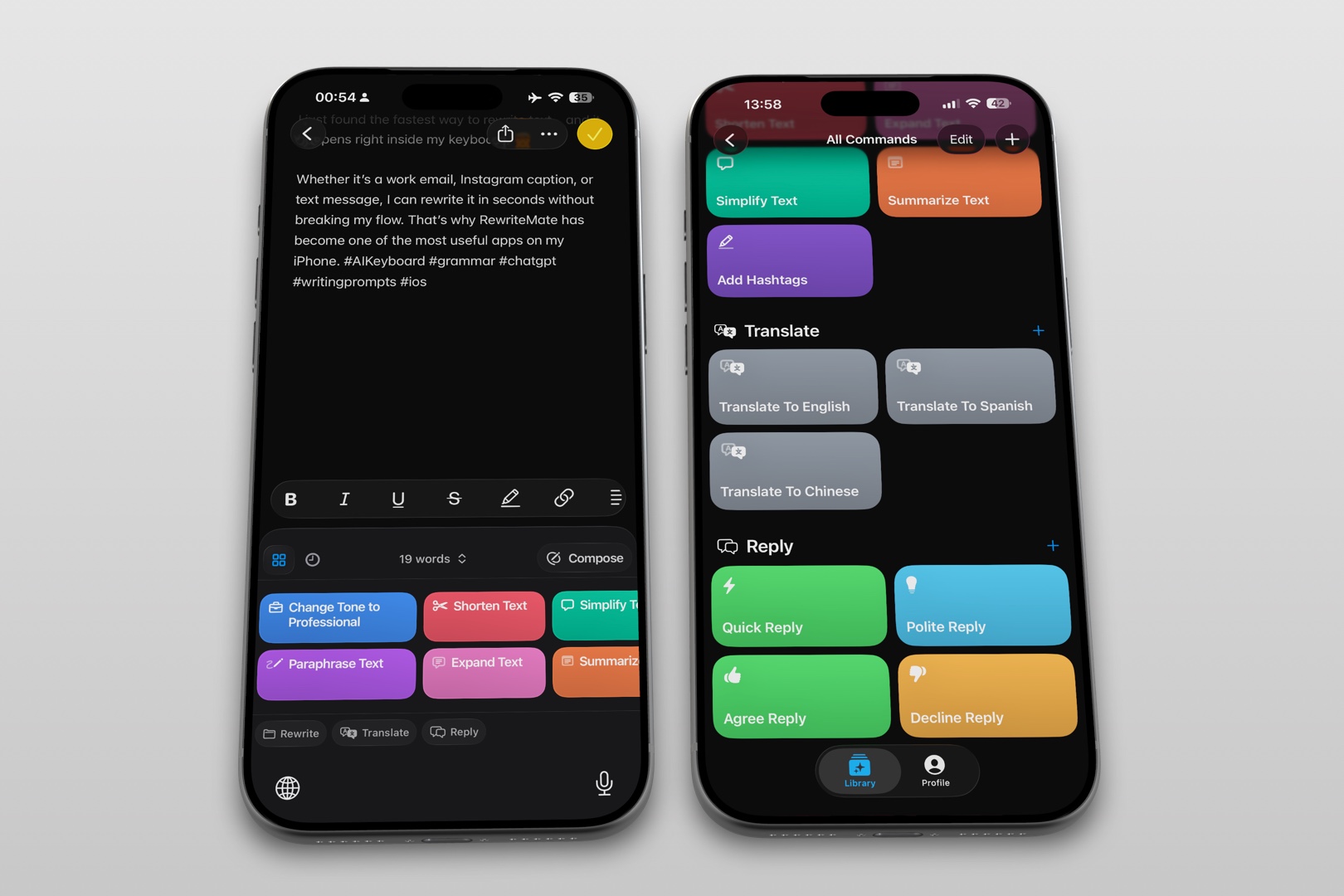
If you write similar professional messages from your iPhone, RewriteMate's custom commands let you save a writing instruction as a keyboard shortcut. The command can help make a draft clearer; it cannot evaluate the offer, verify the deadline, negotiate with an employer, or decide whether the role is right for you.
Command name: Offer-Time Request Check
Instruction to save:
Rewrite this draft as a concise, respectful message asking for time to consider a job offer. Preserve the role, employer, stated deadline, requested decision date, and every offer detail exactly as supplied. Do not imply acceptance, invent enthusiasm, another offer, a reason, or a promise. Keep uncertainty explicit. If a deadline or requested date is missing, leave a clear placeholder rather than guessing. Return only the revised draft.
Use it only after you have added the real facts you want to communicate. Choose the result option that lets you review before sending. Check the role, dates, stated terms, tone, and whether the message accidentally implies a decision. For a sensitive offer or an unclear contractual term, write and review the message yourself or ask a qualified person to help.
Frequently asked questions
How much extra time should I ask for?
Ask for the amount of time you need to make the decision, and propose a specific date you can meet. There is no universal extension period that applies to every employer. Indeed describes common examples, but an employer's own timeline controls what it can accommodate; Cornell recommends naming a decision date and keeping it.
Is it okay to ask for more time by email?
For a simple request, an email can make the requested date clear or confirm a conversation. If you need to discuss several offer terms, ask for a call or meeting rather than trying to negotiate every point in a short message; UW–Madison specifically recommends using email to arrange a discussion instead of attempting to negotiate employment terms entirely by email. Follow the employer's preferred contact method if one was given.
Should I explain why I need the extension?
Give a brief, truthful reason if it helps the employer understand the request, but do not overshare or invent leverage. If you prefer privacy, you can simply say that you would like time to review the offer carefully and name the date you can respond.
What if they say no?
Thank them for clarifying and ask what the final decision date is, if that is still unclear. Then decide using the original or newly stated deadline. Do not treat your requested date as approved until the employer confirms it.
Should I mention that I am waiting on another employer?
Only if that is true and relevant. State the situation briefly, without exaggerating or promising that another offer is coming. You can also ask the other employer about its timeline, but do not claim that it is your first choice unless that is accurate.
Can RewriteMate decide whether I should accept?
No. RewriteMate can help draft or transform text, but it cannot assess whether a job offer fits your needs or verify its terms. Review the offer itself, ask the employer questions, and seek career or professional advice when you need it.
Before you send
The safest short request is appreciative, truthful, and specific: confirm the deadline, ask for one realistic decision date, and wait for the employer to confirm whether it works. Then keep the agreed date. If you want help polishing a draft, RewriteMate can assist with the wording—but verify the names, dates, offer details, and any commitment yourself before you send it.
Related articles
Keep reading

How to Ask a Former Manager to Be a Job Reference
Reconnect with a former manager, ask whether they’re comfortable serving as a reference, and make the request easy to evaluate without assuming they’ll say yes. Includes short message examples and a follow-up checklist.

How to Follow Up After a Job Interview When You Haven’t Heard Back
If the hiring timeline has passed and you have no update, send one brief, courteous message asking about next steps. Use these timing rules and adaptable email examples without treating silence as a definite rejection.

How to Ask Your Manager for a Deadline Extension Before It Slips
Tell your manager early, explain the specific blocker, and propose a date you can actually meet. Use these clear work-message examples and a fact-safe RewriteMate command to draft the request from your iPhone.

Felix Tran
RewriteMate Dev & Editorial Lead
Write about everyday workflows, systems that help ideas move faster, from first draft to finished work.