October 12, 2026
How to Ask for an Update Without Sounding Passive-Aggressive
The clearest way to ask for a work update is to remind the person what you are following up on, say why you need the information now, and ask one specific question. Keep the tone neutral, avoid implying that they have ignored you, and offer a simple way to answer if a full update is not ready.
For example, replace “Just checking in… any update?” with: “Hi Maya — following up on the launch copy we discussed Tuesday. I’m finalizing the review plan today; do you have a draft ready, or should I adjust the timing?” The second message gives context, explains why you are asking, and makes “not yet” a usable answer instead of forcing the recipient to defend a delay.
A short formula for a neutral update request
Use four pieces, usually in two or three sentences:
- Context: Name the project, deliverable, or earlier conversation.
- Reason: Explain what depends on the update or why you need it now.
- Specific ask: Ask for the status, a decision, or one missing detail—not all three at once.
- Easy response path: Let the person say “not ready,” flag a blocker, or suggest when to check again.
Indeed’s current guide to asking for an email update similarly recommends identifying the purpose, naming the information sought, and keeping the request clear. Scribbr’s discussion of “just checking in” offers useful alternatives, but also notes that replacing one phrase is not a permanent fix: any opener can feel loaded if it becomes a repeated nudge without useful context.
Before you send: is an update actually due?
The wording is only one part of how a message lands. Check the situation first:
| Situation | Better move | Why it helps |
|---|---|---|
| The person gave a date and it has not passed | Wait, unless a new dependency makes the matter urgent | A reminder before the agreed time can sound like you are changing the agreement |
| The agreed date passed | Refer to the date and ask what changed or what timing is now realistic | You can be direct without pretending the date was never discussed |
| No date was set, but your work depends on theirs | Explain the dependency and ask for a status or estimate | It shows why the request matters now |
| You need a decision, not a progress report | Ask for the decision and the options needed to make it | “Any update?” hides the action you need |
| You have already followed up several times | Pause or use the agreed escalation path | Repeating the same vague nudge rarely adds useful information |
There is no universal waiting period that fits every workplace, client, or task. Use the timeline you agreed on, the urgency of the dependency, and your team’s norms. If there is a genuine deadline, state it accurately; do not manufacture one to make the request sound more important.
Message examples that sound clear, not pointed
Asking a teammate for a project status
Hi [name] — following up on [deliverable] from [meeting/thread]. I’m using it to [specific next step] today. Is it ready, or is there a blocker I can help with?
This asks about status and offers help without assuming the teammate has done nothing. If you do not have the capacity to help, remove that offer rather than adding it as a politeness formula.
Asking a manager for a decision
Hi [name] — I’m preparing [next step] and need to know whether we’re going with [option A] or [option B]. Do you have a preference, or would you like me to bring a recommendation?
This is more useful than asking for a generic “update” when the work is blocked on a decision. If there are more than two options, list them accurately or point to the document where they are described.
Asking another team for an input
Hi [name] — I’m finishing [shared project] and still need [specific input] from your team before I can complete [next step]. Could you share where that stands? If it will not be ready by [real date], please let me know what timing looks realistic.
Only include the date if it is real and relevant. If the timing is flexible, you can leave the date out and ask for the best estimate instead.
Checking in with a client
Hi [name] — I’m following up on [specific item] we discussed on [date]. I’m planning [next action] and want to make sure it still fits your priorities. Would you prefer [option A], [option B], or a little more time to review?
This gives the client a way to respond even if their plans changed. Do not promise a delivery date, scope change, discount, or other concession unless you are authorized to make it.
When the agreed date has passed
Hi [name] — we had [deliverable] scheduled for [date], and I have not seen it come through yet. Has the timing changed? I need to [specific dependency], so a revised estimate would help me plan the next step.
This is direct because the date is a shared fact. It avoids “you missed the deadline” and focuses on the information needed to proceed. If you are uncertain whether the item arrived through another channel, check before sending.
When you need a quick answer but not a full report
Hi [name] — quick status question on [item]: are we still on track for [agreed milestone]? A yes/no is enough for now; if the plan changed, please send the new estimate when you can.
Use the “yes/no is enough” line only when that really satisfies your need. If you need a detailed explanation or a specific decision, ask for that instead.
Phrases that can sound passive-aggressive—and what to write instead
These phrases are not automatically rude in every relationship. Tone depends on context, frequency, the previous conversation, and whether the message gives the reader something useful to answer. The safer improvement is usually not swapping a phrase for a more elaborate one; it is making the ask specific.
| Potentially loaded opener | More useful version |
|---|---|
| “Just checking in…” | “Following up on [item] from [day]. Do you have a status or a revised estimate?” |
| “Per my last email…” | “Resurfacing the question about [item] so I can [next step].” |
| “Any update??” | “Is [specific deliverable] still on track for [agreed date]?” |
| “I haven’t heard back from you.” | “I’m checking whether you saw the request for [specific input]. If someone else owns it, could you point me to them?” |
| “When can I expect this?” | “What timing looks realistic for [deliverable]?” |
| “Sorry to bother you again…” | “I’m following up because [specific dependency]. Could you let me know [specific answer]?” |
Scribbr points out that “just checking in” can take on a passive-aggressive feel when readers associate it with pressure to reply. But its guide also acknowledges that a replacement phrase can acquire the same connotation if it is used as a repeated nudge. Treat this as a context check, not a banned-words list.
A practical iPhone drafting check
When you write from your phone, a message can become either too abrupt or padded with apologies as you edit it. Before sending, check these five things:
- Does the first line remind the recipient what this is about?
- Did I state why I need the update now, if that matters?
- Is there one clear question they can answer?
- Did I remove blame, sarcasm, and pressure that is not supported by the situation?
- Are dates, dependencies, and next steps accurate?
If the message is email, keep the earlier thread when it still contains the relevant context. Indeed’s email guide recommends a concise, focused request with the previous interaction and the specific information sought. For a quick work chat, a full subject line and formal sign-off may be unnecessary; clarity still matters.
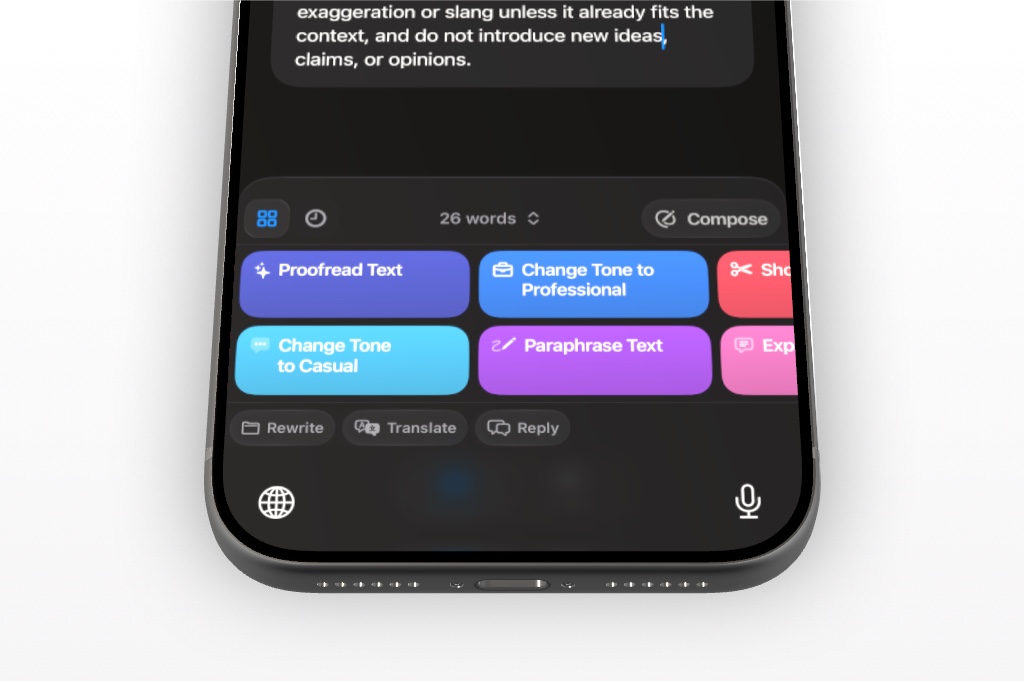
RewriteMate can help adjust the tone of a draft or make it more concise from the iPhone keyboard. It does not know the project status, agreement, or deadline unless you provide those details, and you should verify them before sending.
Save a reusable “ask for an update” command
If you send this kind of message repeatedly, a reusable command can help preserve the same guardrails while you supply the context each time.
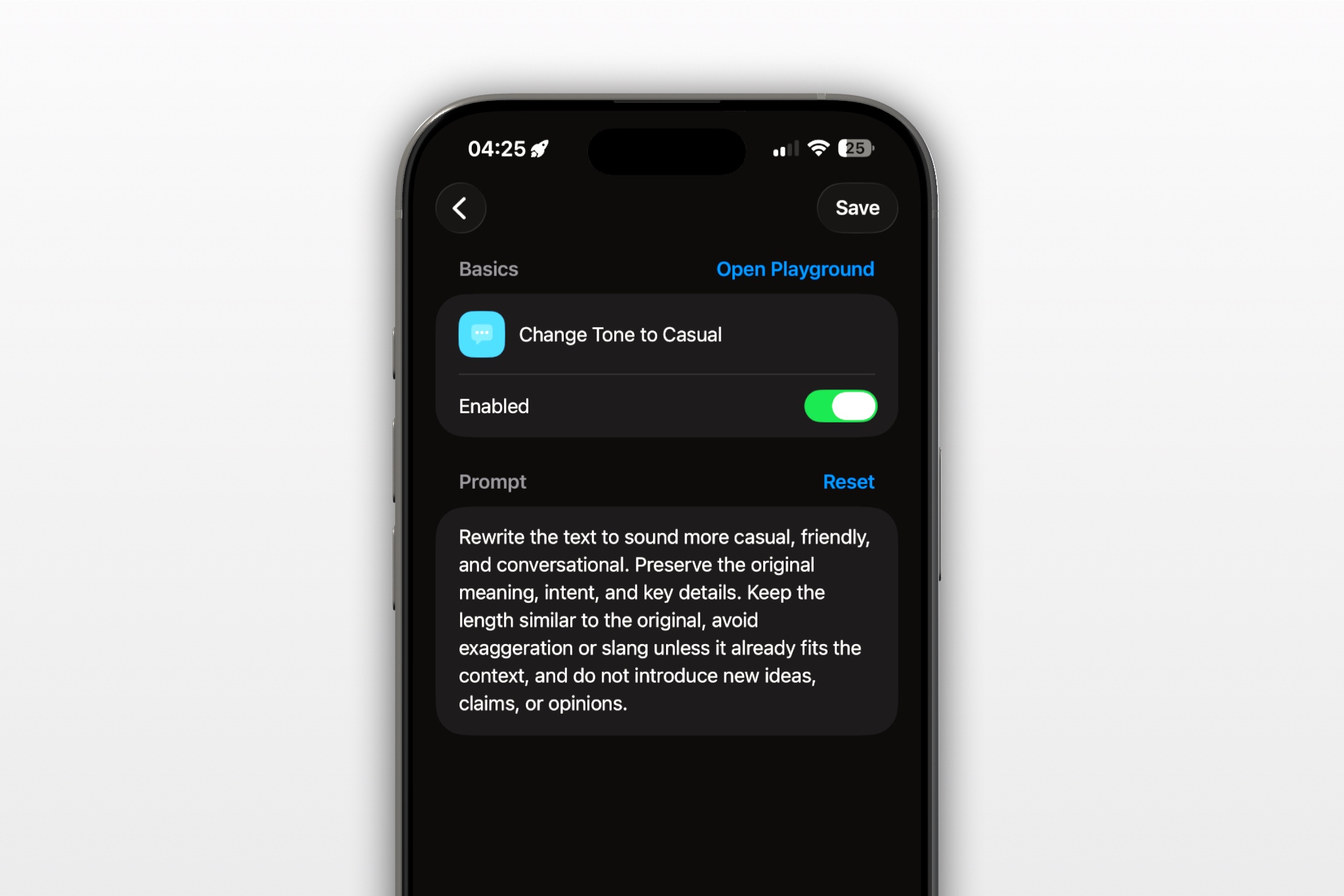
Command name: Neutral status request
When to use: You already know what item you are asking about and need a clear, respectful follow-up. Do not use it to invent a deadline or pressure someone when no response is due.
Suggested folder: Work messages
Output action: Copy for review, or Insert if you prefer to edit the draft in place.
Command instruction:
Rewrite my draft as a concise, neutral request for a status update. Preserve all names, dates, project details, dependencies, and commitments exactly. Keep the specific item and the reason I need the update. Ask one clear question and, where appropriate, leave room for the recipient to say the work is not ready or the timing changed. Do not invent urgency, a deadline, a prior agreement, a status, blame, or a promise. If context is missing, use a bracketed placeholder instead of guessing.
Example input: “Any update on the mockups? I need them for review.”
Possible revised draft: “Hi [name] — do you have a status on the mockups? I’m planning the review and want to confirm whether they’re ready or if the timing has changed.”
This example adds a placeholder because the sender did not provide the recipient’s name or a real deadline. Confirm the message still reflects your situation, and remove any words that imply an agreement or dependency that was not actually established.
FAQs
Is “just checking in” passive-aggressive?
Not always. It can be friendly in some conversations, but it may feel pointed when repeated without context or used to imply that someone is late. A specific reference and question usually make your intent clearer.
How do I ask a coworker for an update without sounding pushy?
Refer to the task, explain any dependency, and ask one answerable question. For example: “I’m preparing the client handoff and need the final numbers. Are they ready, or is there a blocker I should plan around?”
How do I ask my boss for a status update?
State what you need to move forward and ask directly for the status or decision. Keep the message respectful, but do not bury the request under multiple apologies or unnecessary background.
What should I write if the deadline has passed?
Refer neutrally to the agreed date, ask whether the timing changed, and explain the next step that depends on the work. Avoid assigning blame unless a separate conversation requires it.
How many times should I follow up?
There is no single number for every workplace. Consider the agreed timeline, importance of the dependency, and your team’s escalation norms. If repeated nudges are not working, change the channel or ask the appropriate person how to proceed instead of sending the same message again.
Can an AI keyboard make my follow-up sound less passive-aggressive?
It can help revise wording, but it cannot know whether the deadline passed, what was agreed, or how urgent the work is. Supply accurate context, review the result, and correct any invented or softened detail before sending.
Ask directly, with enough context to be fair
A good update request does not have to be elaborate. Name the work, explain why you need an answer, and ask a clear question that the other person can respond to honestly. If the timing is flexible, let them say so; if a real deadline has passed, be direct about what depends on the update.
For repeated work messages drafted on iPhone, RewriteMate can help revise tone or shorten a draft. Treat the result as a wording suggestion—not proof of the status, agreement, or date. Check those details yourself before sending.
Related articles
Keep reading

How to Ask for Approval Without Sounding Demanding
Request a decision clearly in email, Slack, or text without vague follow-ups, unnecessary apologies, or pressure disguised as politeness.
How to Tell a Client You Need More Time Professionally
A clear way to request more time from a client without making excuses, overpromising a new date, or leaving the next step unclear.
How to Reply to an Email Professionally From Your iPhone
Write clear, professional email replies from your iPhone with a simple structure, practical examples, and AI-assisted editing tips that keep your message accurate.

Felix Tran
RewriteMate Dev & Editorial Lead
Write about everyday workflows, systems that help ideas move faster, from first draft to finished work.