October 7, 2026
How to Disagree Professionally in a Slack Message (Without Sounding Dismissive)
To disagree professionally in Slack, state the shared goal, identify the specific concern, explain why it matters, and offer a next step. For example: “I’m aligned on getting this out Friday. I’m concerned the current plan leaves no time for QA; could we move the review to Thursday or reduce the first release scope?” That is clearer and less personal than a bare “This won’t work.”
The challenge is that a short chat message strips away vocal tone and can make blunt wording feel sharper than intended. Slack’s own guidance notes that written tone has less context and recommends direct, neutral phrasing; its conflict guidance also suggests listening and asking questions instead of reacting defensively (Slack on professional communication, Slack on de-escalating workplace conflict). The goal is not to soften your point until it disappears. It is to make the disagreement specific, useful, and open to a response.
Use this four-part structure
You do not need a long preamble or a compliment sandwich. Try this compact structure instead:
- Name the shared goal. Show what you are trying to protect or accomplish together.
- State the disagreement plainly. Identify the proposal, assumption, or decision you see differently.
- Give a concrete reason. Use a relevant constraint, example, risk, or missing piece of information.
- Offer a next step. Suggest an alternative, ask a focused question, or invite a quick discussion.
For example:
“I’m aligned on keeping onboarding simple. I’m not sure we should remove the confirmation step, because support still needs a way to catch incorrect account details. Could we keep it for the first release and review the impact afterward?”
This structure separates your view of the work from your view of the person. A workplace communication guide from Virginia Tech similarly recommends being clear and objective, focusing on specific actions rather than personal attacks, and pairing concerns with possible solutions (Virginia Tech’s employee communication guide).
Phrases that make disagreement easier to hear
Choose an opener that fits how certain you are and how much context you have. You can be respectful without repeatedly apologizing or hiding your position behind “just a thought.”
When you have a clear concern
- “I see the goal. I have a concern about [specific risk] because [reason].”
- “I’d recommend a different approach: [alternative]. That would help us [shared outcome].”
- “I don’t think this version is ready to ship yet. The open issue is [specific issue]; can we resolve that before we confirm the date?”
When you may be missing context
- “I may be missing some context. How does this plan account for [constraint]?”
- “Can you walk me through the assumption behind [decision]? I’m seeing a possible issue with [specific detail].”
- “I read this differently: [your interpretation]. Is that what you intended?”
When you agree with the goal but not the method
- “I agree we need to reduce the handoff time. I’m not sure removing the review step gets us there; could we test [alternative]?”
- “The outcome makes sense to me. I’d change the sequence so [reason].”
- “I’m on board with the direction. My concern is the timing, not the proposal itself.”
Avoid using a polite opener that contradicts what follows. “Great idea, but this is wrong” can sound like praise used as packaging for a dismissal. If you genuinely agree with one part, say which part, then name the concern accurately.
Examples for common Slack disagreements
Pushing back on a deadline
Too abrupt: “Friday isn’t realistic.”
More useful: “I want us to give the release a reliable handoff. With the data review still open, Friday leaves little time to address issues. Could we either move the date to Monday or ship the smaller scope on Friday?”
The revised message gives a reason and two possible paths. If you do not know which option is feasible, make that uncertainty clear instead of presenting a guess as a fact.
Disagreeing with a product or design decision
Too personal: “You’re overcomplicating this.”
More useful: “I’m concerned the extra step may make the setup harder to complete. Could we compare the current flow with a version that asks for this information later?”
This focuses on the user journey rather than labeling the coworker’s judgment. Keep the claim proportionate: say “may make” if you have a concern, not “will make” unless you have evidence for that certainty.
Correcting an incorrect detail in a channel
Potentially embarrassing: “That’s not what the spec says.”
More useful: “Small correction: the spec lists the limit as 20, not 25. I’m linking the relevant section here so we can confirm we’re using the same version.”
When correcting a detail, give the source or location you are relying on. If the disagreement is about interpretation rather than a plainly checkable fact, phrase it as a question and make room for other context.
Responding when you feel irritated
Draft the substance first, but do not send a message whose main purpose is to show how annoyed you are. A short pause can help you separate the practical issue from the emotional reaction. Slack’s conflict guidance recommends resisting an immediate defensive response and asking questions that let the other person explain their view (Slack’s conflict communication guidance).
Try: “I want to make sure I understand the decision. I’m concerned about [impact]; what information led us to choose this option?” If the matter is urgent, state the time-sensitive consequence and the decision you need rather than adding a frustrated aside.
Keep the message readable on a phone
When writing from an iPhone, a long explanation is easy to send as one dense block. Before posting, check that the central point appears near the beginning and that the request is easy to spot. A simple layout can help:
“I agree with the objective. My concern is [one sentence]. Could we [next step]?”
For a more complex issue, use short paragraphs or bullets for the evidence and options. Do not split one thought across a string of separate messages if doing so makes the disagreement harder to follow. Include only enough background for the people in that thread to understand the point; link to the source document when details matter.
Slack’s professional communication guide recommends making written messages clear enough to act on and keeping the tone focused on the work rather than personal interpretation. These principles matter especially in short messages, where the recipient may not have the same context you had while drafting (Slack’s communication guide).
Decide whether Slack is the right place
Slack works well for a concise disagreement that benefits from a shared record or a quick decision. It may be the wrong channel when the topic is emotionally charged, confidential, complex, or likely to be misunderstood without back-and-forth.
Use a channel or thread when the decision affects the group and relevant people need the context. Reply in the existing thread when that keeps the discussion attached to the proposal. Move to a private or live conversation when the issue concerns an individual’s performance, confidential information, a sensitive relationship, or a conflict that is already escalating. Then summarize any decision in the appropriate work channel if the team needs a record.
Do not treat a written disagreement as a substitute for raising an urgent safety, legal, security, or policy concern through the appropriate internal process. Follow your organization’s escalation path and contact the relevant qualified team when the stakes require it.
A quick review before you send
Read the message once as if you did not write it. Ask:
- Is the disagreement about a specific idea, decision, or risk—not the person?
- Did I explain why the issue matters, without exaggerating what I know?
- Is my proposed alternative realistic, or should I ask a question instead?
- Can the recipient tell what response or next step I need?
- Would a thread, private message, or live conversation be more appropriate?
- Did I preserve important details such as dates, figures, owners, and commitments accurately?
If the answer to the last question is no, pause and verify those details. A polished sentence is not a substitute for checking whether its facts are correct.
Use RewriteMate to revise the wording, not decide the disagreement
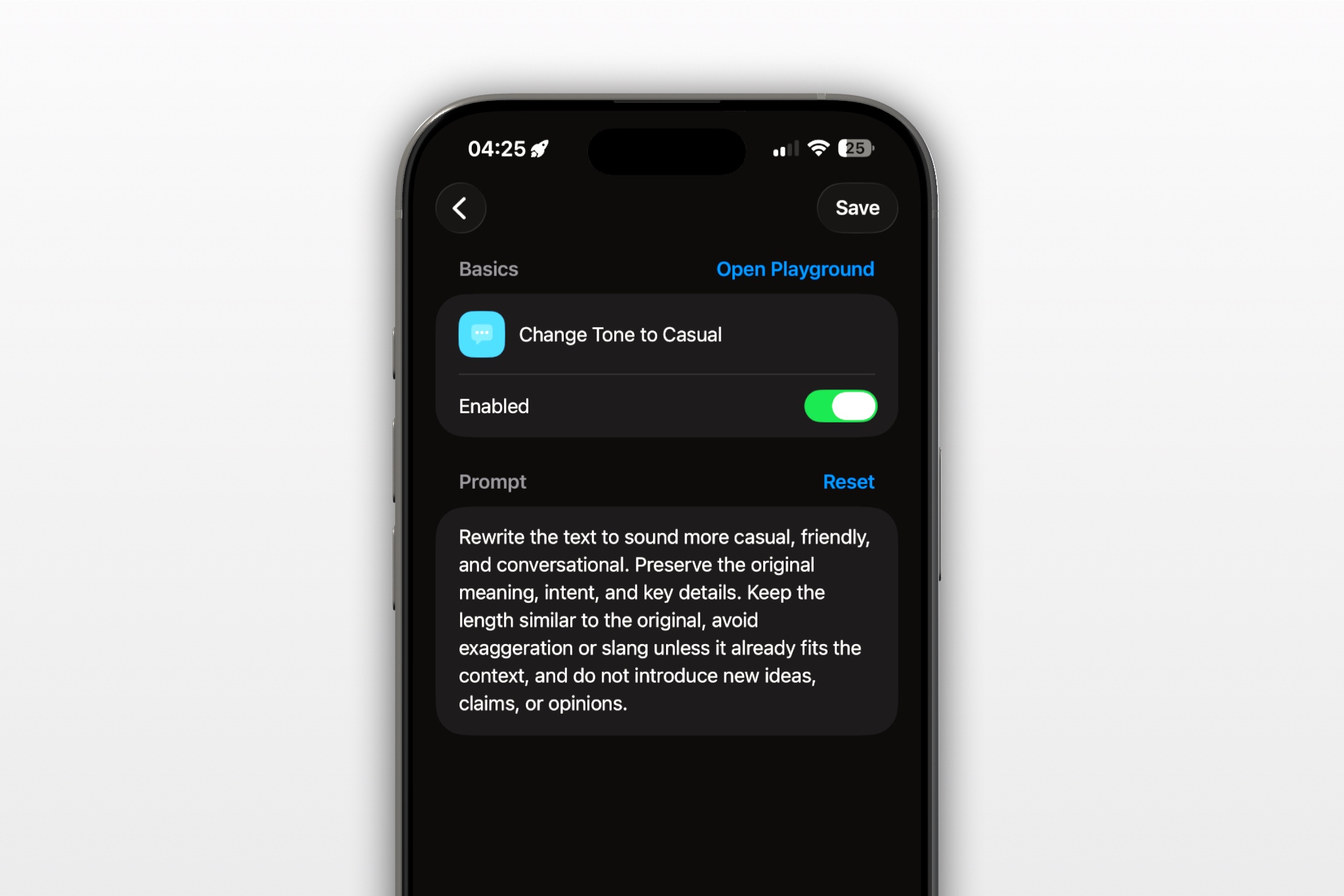
If you already have a draft, RewriteMate can help you proofread it, adjust its tone, paraphrase it, or make it more concise. It can also be given a custom instruction for the particular edit you want. For example, a prompt might be: “Keep my position and all facts unchanged. Make this Slack reply calm, specific, and collaborative. Do not add claims or commitments.” Treat the output as a draft: verify the substance, names, figures, deadlines, and requested action before posting.
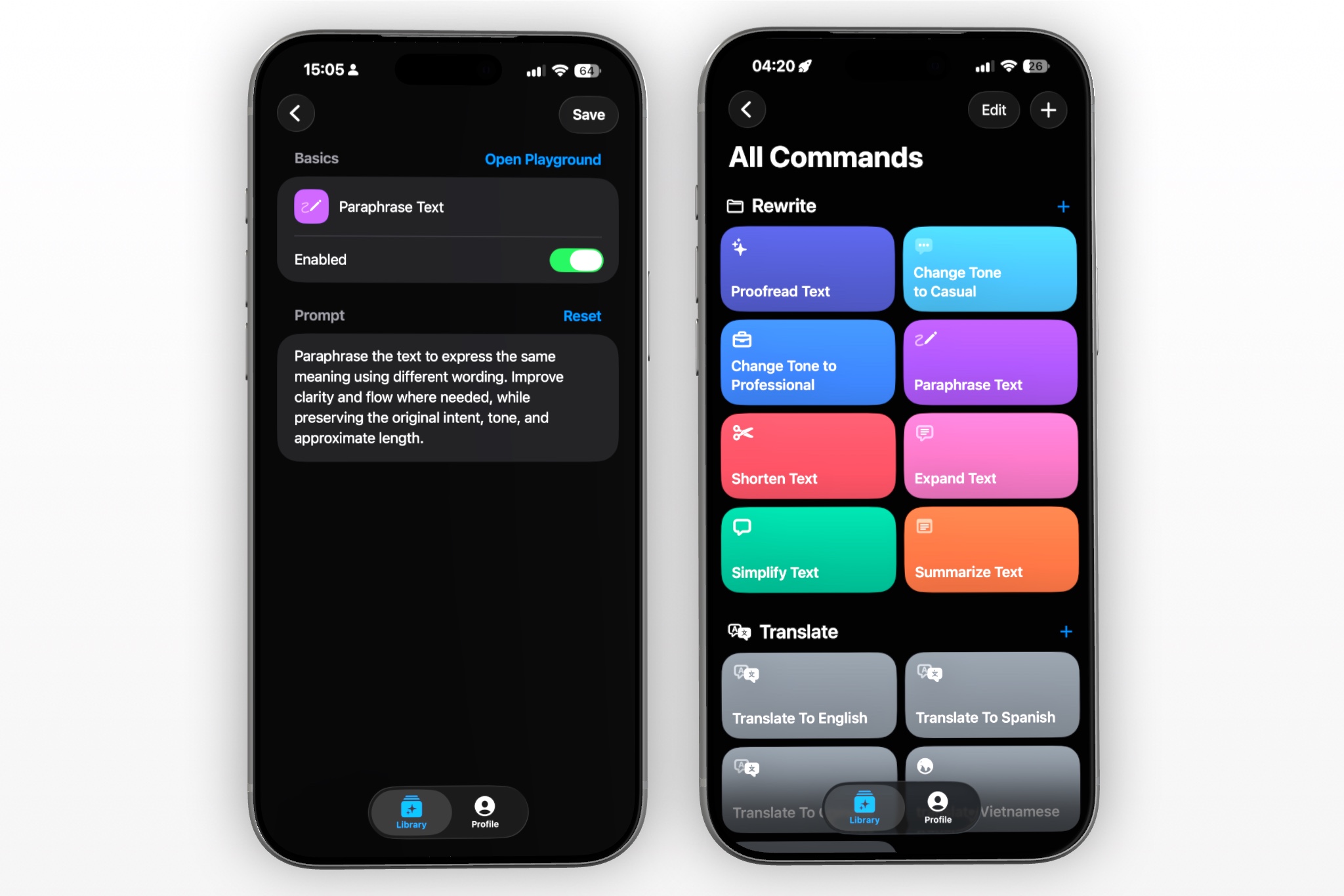
For a repeatable workflow, you could save a custom command that asks for concise, neutral wording while preserving your main point. Use the result only if it still represents what you mean; you remain responsible for deciding whether to disagree, what evidence to include, and where to raise it.
RewriteMate is an optional writing aid, not a source of workplace policy or a substitute for your judgment. Don’t paste sensitive company or customer information into a tool unless your organization’s rules allow it. If you want to try RewriteMate for drafting or revising short messages on iPhone, learn more about RewriteMate.
Frequently asked questions
What is a polite way to disagree in Slack?
Start with the shared goal, state your specific concern, explain why it matters, and suggest a next step. For example: “I agree with the goal. My concern is the review window; could we move the check-in earlier so there’s time to fix anything we find?”
Should I say “I respectfully disagree” in a work message?
You can, but the phrase alone does not explain your reasoning. Follow it with the point you disagree with, the reason, and a constructive next step. Often, “I see it differently because…” sounds more natural and gives the conversation something specific to address.
How do I disagree with my manager in Slack?
Be direct and respectful. State the business concern and its basis, ask a focused question if context may be missing, and suggest an alternative when you can. If the topic is sensitive, high-stakes, or easy to misread, request a private conversation rather than trying to settle it in a public channel.
How do I push back without sounding negative?
Connect your concern to a shared objective and offer a path forward. “I’m worried this may delay QA; could we move the review to Thursday?” is more actionable than criticizing the proposal without explaining what should happen next.
Should I disagree in a Slack channel or a direct message?
Use the place where the decision belongs. A shared decision may need a channel or thread so the relevant team can see the reasoning; an individual or sensitive concern may be better handled privately. Follow your team’s norms and confidentiality rules.
Can RewriteMate write a disagreement for me?
RewriteMate can help transform text you provide, such as proofreading, changing tone, paraphrasing, or shortening a draft. You still need to supply the context, check the result against what you actually believe, and verify all details before sending.
Related articles
Keep reading

How to Ask for Clarification in English at Work
Ask for the missing detail in a work message without sounding uncertain or creating another round of confusion.

How to Ask for Approval Without Sounding Demanding
Request a decision clearly in email, Slack, or text without vague follow-ups, unnecessary apologies, or pressure disguised as politeness.

How to Reply to an Email Professionally From Your iPhone
Write clear, professional email replies from your iPhone with a simple structure, practical examples, and AI-assisted editing tips that keep your message accurate.

Felix Tran
RewriteMate Dev & Editorial Lead
Write about everyday workflows, systems that help ideas move faster, from first draft to finished work.