October 8, 2026
How to Remind a Client About an Overdue Invoice Without Sounding Rude
To remind a client about an overdue invoice, keep the message brief and factual: identify the invoice, state its due date, say that your records show it remains unpaid, and ask for a payment update or the next step. For example: “Hi [Name], I’m following up on invoice [number] for [amount], due [date]. I haven’t seen the payment come through yet. Could you let me know its status? I’ve attached the invoice again for convenience.”
You are not being rude by asking about an amount that is due under your agreement. You also do not need to assume the client is ignoring you: there may be an invoice-routing, approval, or payment-processing issue, or your own records may need updating. A neutral reminder gives both sides a clear way to check.
Check the facts before you follow up
Before writing, open your invoice and payment records and confirm:
- The invoice number and client or company name.
- The amount and currency still outstanding.
- The due date and payment terms that apply to this invoice.
- Whether a partial payment, credit, or revised invoice exists.
- The payment method or link, if you plan to include it.
- Whether the client asked you to submit invoices through a particular person, portal, or accounts-payable address.
This quick check prevents an awkward false reminder—for example, chasing the original amount after a partial payment or writing to the project contact when invoices must go to a separate finance address. If something does not match, ask a neutral question rather than asserting that the client has failed to pay.
Do not invent a late fee, interest charge, new deadline, pause in service, or legal consequence to make a reminder sound more forceful. Check the signed agreement and the rules that apply where the transaction took place first. As one jurisdiction-specific example, UK government guidance sets out when business-to-business commercial payments are considered late and explains the scope of interest and recovery costs; those rules should not be assumed to apply elsewhere (GOV.UK: late commercial payments). This article offers communication examples, not legal or debt-collection advice.
Choose the right tone for the situation
The useful distinction is not “nice” versus “aggressive.” It is “clear about the account” versus “accusatory about the person.”
| Situation | Helpful approach | Avoid |
|---|---|---|
| First reminder shortly after the due date | Neutral check-in with invoice details | “You forgot to pay” |
| No reply to an earlier reminder | Refer to the earlier note and ask for a status | “I’ve asked you several times…” as the opening |
| Client says payment is being processed | Ask for the expected processing date or remittance detail | Treating an estimate as a confirmed payment |
| Client disputes the invoice | Ask which line or term they are questioning and pause assumptions | Threatening a fee or collection step before checking the agreement |
| Several reminders have gone unanswered | Use the agreed escalation path and get appropriate advice if needed | Sending a legal-sounding threat you may not be able to enforce |
“I’m following up” is direct without assigning blame. “Your invoice is overdue” can also be appropriate when the due date is confirmed, but include the invoice number and date so the client can identify the item. A short courtesy phrase is enough; excessive apologies can make a routine account question sound like you are asking for a favor.
Copyable overdue-invoice reminder templates
Replace every bracketed field with verified details. Remove any sentence that does not fit your actual terms or situation.
First reminder: recently past the due date
Subject: Follow-up: invoice [number], due [date]
Hi [Name],
I’m following up on invoice [number] for [amount and currency], which was due on [date]. My records show it is still outstanding. Could you let me know its payment status? I’ve attached the invoice again for convenience.
Thanks,
[Your name]
Short message when you already have an active conversation
Hi [Name] — quick follow-up on invoice [number] for [amount], due [date]. I haven’t seen it marked as paid yet. Could you check whether it has been submitted for payment? I can resend the invoice or provide any processing details you need.
Use a short message only if that channel is normal for your working relationship and appropriate for discussing invoice details. Avoid putting unnecessary financial information in a group chat or public channel.
Second reminder after no response
Subject: Second follow-up: invoice [number]
Hi [Name],
I’m checking back on my note below about invoice [number] for [amount], due [date]. Could you confirm whether it has reached the right person for processing, or let me know when I should expect an update? I’ve included the invoice again.
Best,
[Your name]
This keeps the request practical: confirm receipt or share a status. It does not claim to know why there has been no payment.
When the client says payment is in progress
Thanks for the update. Could you share the expected payment date or remittance reference once it is available? I’ll update my records when the payment arrives.
This acknowledges what the client said without recording an estimate as if the money has already cleared. If your own records show payment later, close the loop and stop further reminders.
When the client disputes part of the invoice
Thanks for flagging this. Which line item or agreed term would you like me to review? I’ll check it against the estimate and our records, then come back to you with a clear response. For the undisputed portion, please let me know whether it can be processed separately under our agreement.
Only include the last sentence if partial payment is suitable under the actual contract and your accounting process. For a substantial dispute, pause the template-writing mindset and review the source documents or consult a qualified adviser.
What to do when the reminder gets no response
There is no single reminder interval that fits every client, industry, invoice term, or jurisdiction. Use the due date and any collection process stated in your agreement, the client’s accounts-payable process, and the urgency of your own situation. Keep a simple record of when you sent each note, which invoice it concerned, and any reply or promised payment date.
If you have sent a clear reminder and received no response:
- Verify the invoice is still outstanding and that you contacted the correct person or payment channel.
- Reply in the existing email thread where practical, so the invoice and earlier context are easy to find.
- Ask one specific question: “Could you confirm the payment status by [date]?” Use a date only when you have a sound reason and it is consistent with your agreement and process.
- If there is still no answer, follow the written escalation process in your contract or seek suitable professional guidance before making a formal demand or changing service.
Keep messages proportionate. A reminder is not proof of bad faith, and silence alone does not tell you whether the invoice is disputed, delayed in processing, or missed. But you do not have to keep sending the same vague “just checking in” note indefinitely; move to a clear status request and then the appropriate process for your situation.
A reusable RewriteMate command for invoice reminders
If you write payment reminders repeatedly from your phone, you can save a custom command for the wording pass. Use it to make a draft concise and professional—not to decide what is owed or what action you are legally entitled to take.
Command name: Polite Invoice Reminder
Suggested folder: Client communication
Suggested output action: Copy, then verify and paste into the appropriate email or message. If revising an existing draft, use Replace only after checking the selected text.
Custom instruction:
Rewrite this draft as a concise, courteous business payment reminder. Preserve every invoice number, name, amount, currency, due date, payment term, and link exactly as written. Do not add late fees, interest, deadlines, legal consequences, or promises. Do not guess why payment is late. State that my records show the invoice is outstanding as of [date checked], and ask for [payment status or specific next step]. If any required detail is missing or inconsistent, flag it for me instead of filling it in. Keep the message under [word limit] words.
Example input:
hey, checking about invoice RM-104 for USD 850 that was due Oct 2. can you let me know if accounts has it? I can resend if needed
Possible cleaned-up draft:
Hi [Name], I’m following up on invoice RM-104 for USD 850, due October 2. Could you confirm whether it has reached accounts payable for processing? I can resend the invoice if helpful.
This example shows a wording edit only; it is not evidence that a client will pay sooner. Before sending, compare the output with the actual invoice and agreement. Check names, number, amount, currency, dates, links, and any statement about payment terms yourself. Don’t include private customer or financial information in an AI tool unless its handling is allowed by your organization’s policies.
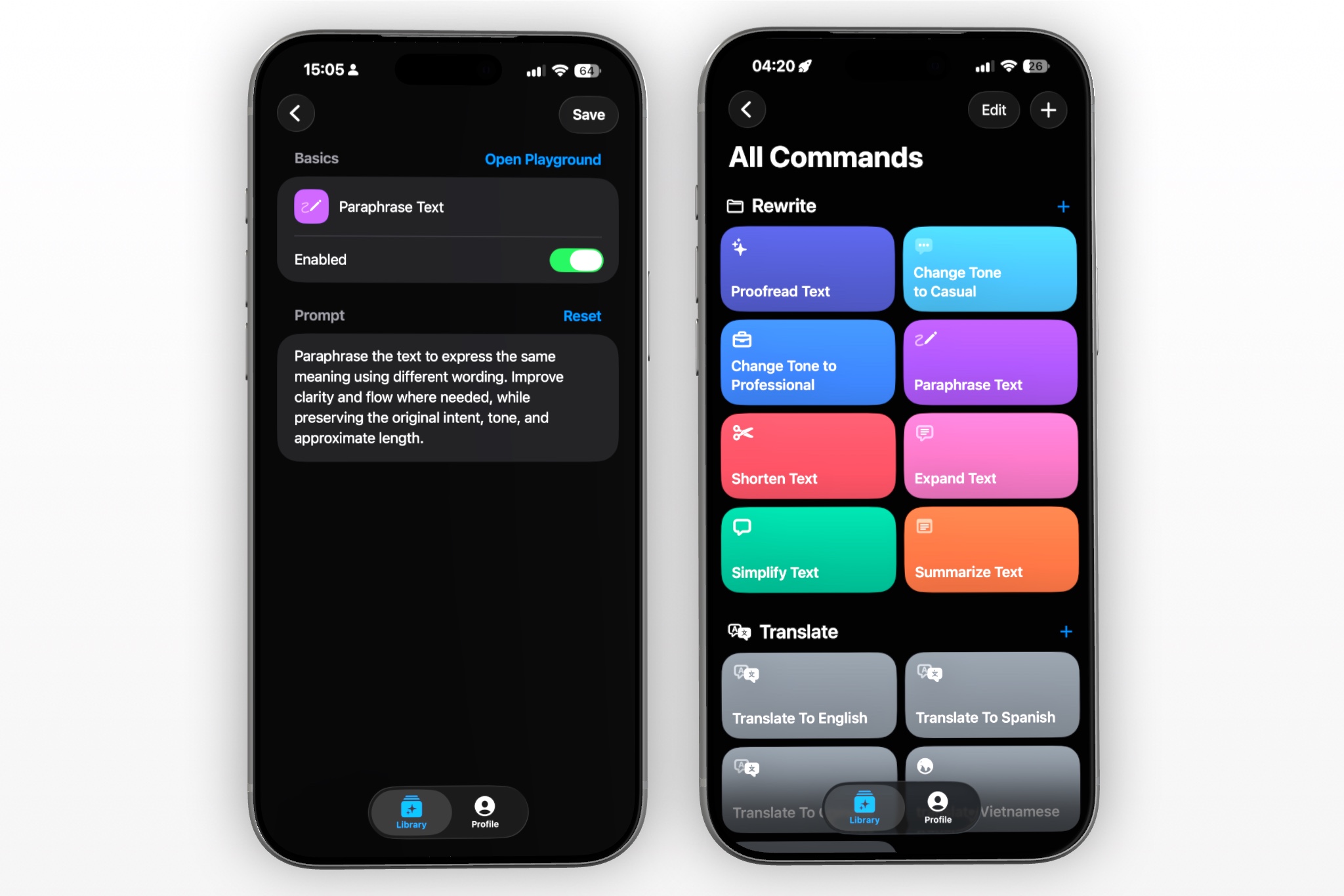
RewriteMate supports reusable custom commands and text transformations such as proofreading, tone changes, and shortening. You can use a custom instruction to request this kind of wording review, then inspect the result before using it. It does not determine whether a payment is legally overdue, verify your books, or replace accounting or legal advice.
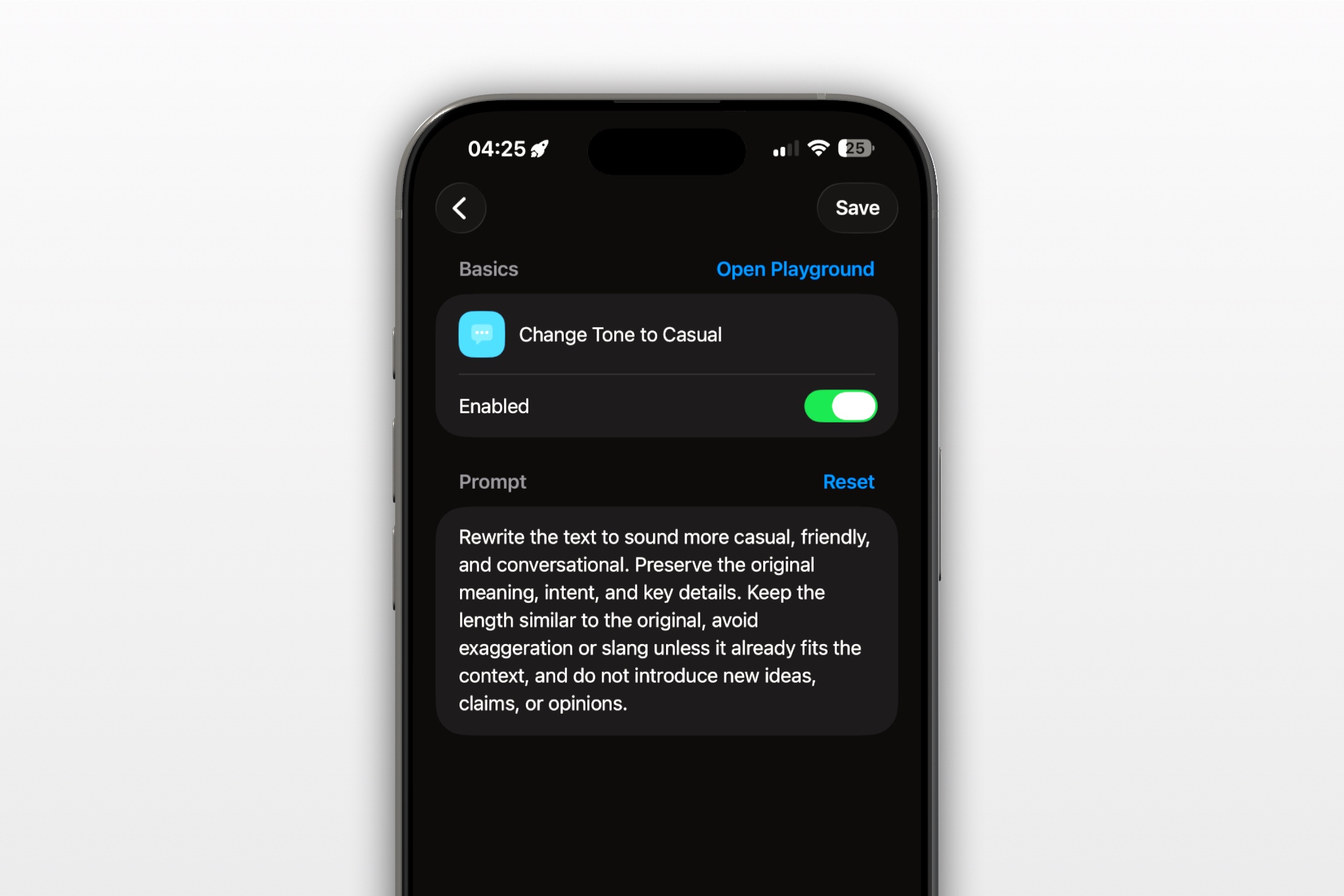
If you often draft client messages on iPhone and want a consistent editing step, learn more about RewriteMate. Keep invoice records and payment decisions in your normal accounting workflow; use the keyboard only to help shape the message you choose to send.
Frequently asked questions
Is it rude to remind a client about an overdue invoice?
No. A brief, factual reminder about an invoice that is genuinely due is a normal business communication. Confirm the details first, avoid accusing the client of ignoring you, and make the requested next step clear.
How do I politely ask a client to pay an overdue invoice?
Identify the invoice number, amount, and due date; say your records still show it as outstanding; and ask for a payment update. Reattach the invoice or include the agreed payment link if appropriate.
What should I write if the client has not replied to my invoice reminder?
Refer to your earlier message and ask one direct question, such as whether the invoice reached accounts payable or when you can expect a status update. Verify the invoice is still unpaid before sending another reminder.
Should I charge a late fee or interest on an overdue invoice?
Do not add a fee or interest to a reminder unless the applicable agreement and local rules support it. Rules differ by jurisdiction and type of transaction. Check the official guidance for your location or consult a qualified adviser; for example, GOV.UK’s late-payment guidance applies to UK commercial payments, not every client relationship worldwide.
Should I send an invoice reminder by email or text?
Use the channel agreed with the client or required by its payment process. Email is often practical when you need to include the invoice and a record; a brief text may suit an established relationship, but keep private financial details out of group conversations.
Can RewriteMate write an invoice reminder for me?
RewriteMate can help revise text you provide, including changing tone or shortening a draft. It cannot confirm your accounting records or decide what the contract allows. Verify every invoice detail and any payment-term language before sending.
Related articles
Keep reading
How to Tell a Client You Need More Time Professionally
A clear way to request more time from a client without making excuses, overpromising a new date, or leaving the next step unclear.
How to Reply to an Email Professionally From Your iPhone
Write clear, professional email replies from your iPhone with a simple structure, practical examples, and AI-assisted editing tips that keep your message accurate.
How to Ask for Approval Without Sounding Demanding
Request a decision clearly in email, Slack, or text without vague follow-ups, unnecessary apologies, or pressure disguised as politeness.

Felix Tran
RewriteMate Dev & Editorial Lead
Write about everyday workflows, systems that help ideas move faster, from first draft to finished work.