
October 11, 2026
How to Respond to an Angry Customer Without Sounding Defensive
When a customer is angry, the safest useful reply is not a clever comeback or an instant apology. It is a short message that shows you understood the specific problem, separates confirmed facts from what still needs checking, and gives one clear next step you are authorized to offer.
That approach works because defensive replies tend to argue with the customer’s feelings before addressing the issue. But a reply that is too eager to please can create a different problem: it may promise a refund, deadline, replacement, or guarantee you cannot approve. The goal is calm, specific, and accurate—not robotic agreement.
The quick framework: acknowledge, clarify, act, follow through
Before sending, build the response in four parts:
- Acknowledge the concrete impact. Name what the customer says went wrong. “I can see why the duplicate charge is frustrating” is more specific than “Sorry for any inconvenience.”
- Clarify what is known. If you have verified the issue, say so. If not, say what you are checking rather than guessing.
- State the next action. Explain what you will do, what information you need, or who will review it.
- Set an accurate expectation. Give a timeframe only if you can stand behind it. Do not invent a deadline to make the message sound reassuring.
Customer-support guidance from Intercom emphasizes understanding the root complaint and avoiding empty, generic phrases. Gorgias likewise recommends reviewing the customer’s context and adapting templates, rather than sending a script unchanged. Treat any template below as a structure to adapt—not as permission to make a commitment.
First, decide what kind of reply is appropriate
“Angry customer” describes a tone, not the facts or the remedy. Before writing, classify the situation:
| What you know | Safer response approach | Avoid |
|---|---|---|
| The issue is confirmed and your organization caused it | Acknowledge the specific mistake, apologize plainly if appropriate, and describe the approved correction | Broad guarantees that it will never happen again |
| The customer reports a problem you have not verified | Recognize the impact and explain what you are checking | Agreeing to unverified details or blaming the customer |
| The requested remedy depends on policy or another team | Explain the review or handoff and when you can next update them, if known | Promising a refund, replacement, credit, or exception before approval |
| The message includes threats, harassment, or a safety concern | Follow your organization’s escalation and safety procedures | Trying to resolve a safety issue with a tone-polishing prompt |
This distinction helps you avoid two common extremes: sounding dismissive because you are protecting yourself, or sounding overly agreeable because you want the customer to calm down. You can take the customer seriously without confirming facts you have not checked.
A repeatable customer complaint response template
Use this as a starting point, then replace every bracket with verified, relevant information:
Hi [name],
I understand why [specific issue and impact] is frustrating. I’m checking [specific detail] so I can give you an accurate answer. My next step is [action you are authorized to take]. I’ll update you [timeframe only if confirmed].
Thank you for flagging this,
[your name]
The template deliberately leaves out a remedy and a deadline unless you know they are real. If you cannot give a timeframe, say what is happening without adding a made-up one: “I’m reviewing the order details now and will reply here once I’ve confirmed the next step.” That sentence is only appropriate if you are actually reviewing the order and will actually follow up.
If the company’s mistake is confirmed
Hi [name],
You’re right that [specific verified error] happened. I’m sorry for the extra work this caused. I’ve [completed approved action] and [explain what the customer should expect next, if verified].
[Name]
Keep the apology proportionate and factual. Do not add “this will never happen again” unless your organization has verified that claim and authorized you to make it. If you do not yet know the cause or corrective plan, do not imply that you do.
If you need to investigate before answering
Hi [name],
I can see that [reported issue] has disrupted [specific impact]. I haven’t confirmed the cause yet, so I don’t want to guess. I’m checking [relevant record or detail]. If you can share [one necessary detail], I can make sure I’m reviewing the right [order/account/request].
[Name]
Ask only for information that is genuinely needed, and use your company’s approved process for sensitive account details. Do not ask the customer to put passwords or payment-card details into an ordinary email or message.
If the requested fix is outside your authority
Hi [name],
I understand you’re asking for [requested resolution]. I can’t confirm that outcome myself, so I’ve sent the details to [appropriate team or role] for review. I’ll [next action you can genuinely perform].
[Name]
Avoid using “I’ve escalated this” unless you actually completed the handoff. If your organization has a specific escalation route or required language, follow it.
If the customer is mistaken about a policy or expectation
Hi [name],
I understand why you expected [customer’s expectation]. The policy for [relevant situation] is [accurate, current policy in plain language]. In this case, [how the policy applies, based on verified facts]. I can help with [available option, if any].
[Name]
Correct the misunderstanding without calling the customer unreasonable. Link or point to the relevant policy if your company permits it. If an exception is possible but not yours to approve, say that clearly instead of presenting it as guaranteed.
How to sound calm without sounding cold
Refer to their actual problem, not only their emotion
“I can see why this is frustrating” can be a useful opening, but it is not a resolution. Follow it with the particular issue: the order arrived late, a feature is unavailable, or the customer received conflicting information. Intercom’s guidance highlights the value of identifying the root issue and avoiding generic filler; make the acknowledgment demonstrate that you read the message.
Use ownership carefully
You can take responsibility for the next step without making an unsupported admission about the cause. For example, “I’ll check the status and reply with what I find” describes your action. “We caused this and will compensate you” asserts cause and remedy. Use the latter only when those facts and authority are established.
This is a communications practice, not legal advice. If a complaint involves a safety incident, a regulated product, a formal claim, or a request to preserve records, follow your organization’s procedures and consult the appropriate manager or qualified professional.
Replace defensive phrases with useful ones
| Instead of… | Try… |
|---|---|
| “As I already explained…” | “Let me make the next step clearer.” |
| “That’s not our fault.” | “I’m checking where the process broke down before I answer.” |
| “You must have…” | “Can you confirm [one detail] so I can check the right record?” |
| “Calm down.” | “I understand this needs attention. Here’s what I can verify so far.” |
| “We’ll fix this immediately.” | “I’m taking [specific action]. I can confirm the timing once [relevant check] is complete.” |
These are example rewrites, not universal scripts. If the customer’s language crosses your workplace’s boundaries, use its escalation policy rather than continuing a conversation that feels unsafe.
A practical iPhone workflow for drafting a reply
Writing on a phone can make it tempting to answer while still upset or to send the first polished-sounding draft. A short pause and a fact check are more valuable than making the prose sound perfect.
- Capture the facts before composing. Note the customer’s stated issue, the details you have verified, what remains unknown, and the action you are allowed to take.
- Draft a short first response. Acknowledge the specific impact and state the real next step. Leave out unapproved remedies and unconfirmed timing.
- Review for defensiveness and overpromising. Remove blame, sarcasm, “as I said,” speculative causes, and phrases like “guaranteed” or “never again” unless approved and true.
- Check names, numbers, dates, policy wording, and commitments. A smoother sentence is not evidence that its details are correct.
- Send only through the right channel and workflow. Use your team’s customer-support system and escalation rules where applicable; a keyboard assistant does not know your ticket history or internal policy unless you provide and verify that context.
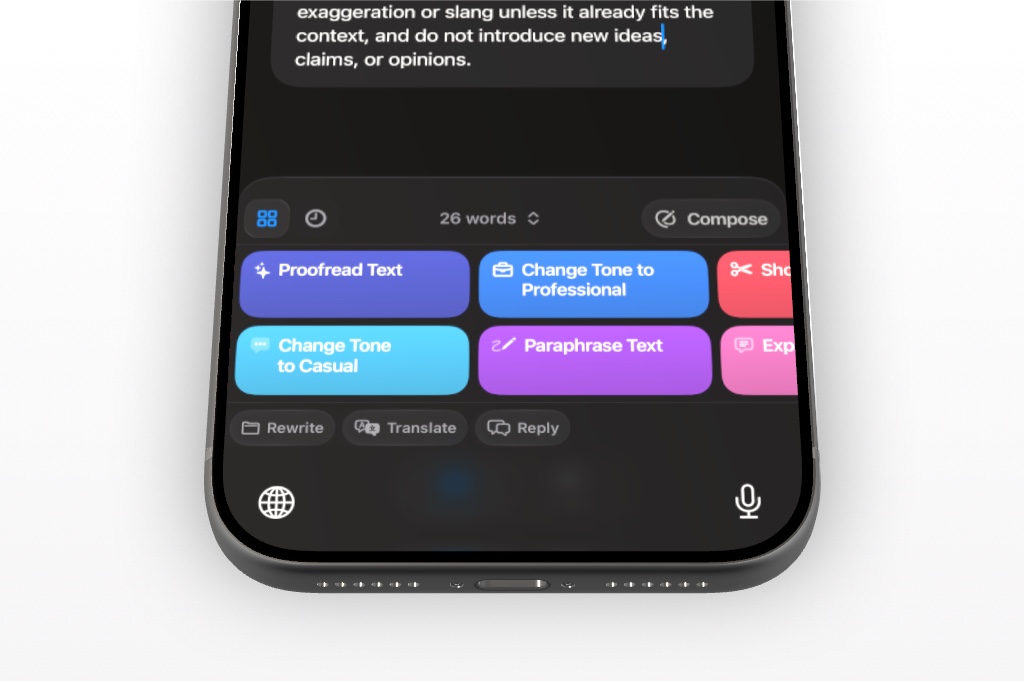
RewriteMate can help proofread a draft or adjust its tone on iPhone, but it cannot determine your company’s policy or verify a customer record. Review every suggested edit before sending, especially names, account details, dates, and commitments.
Optional RewriteMate custom command for a calmer draft
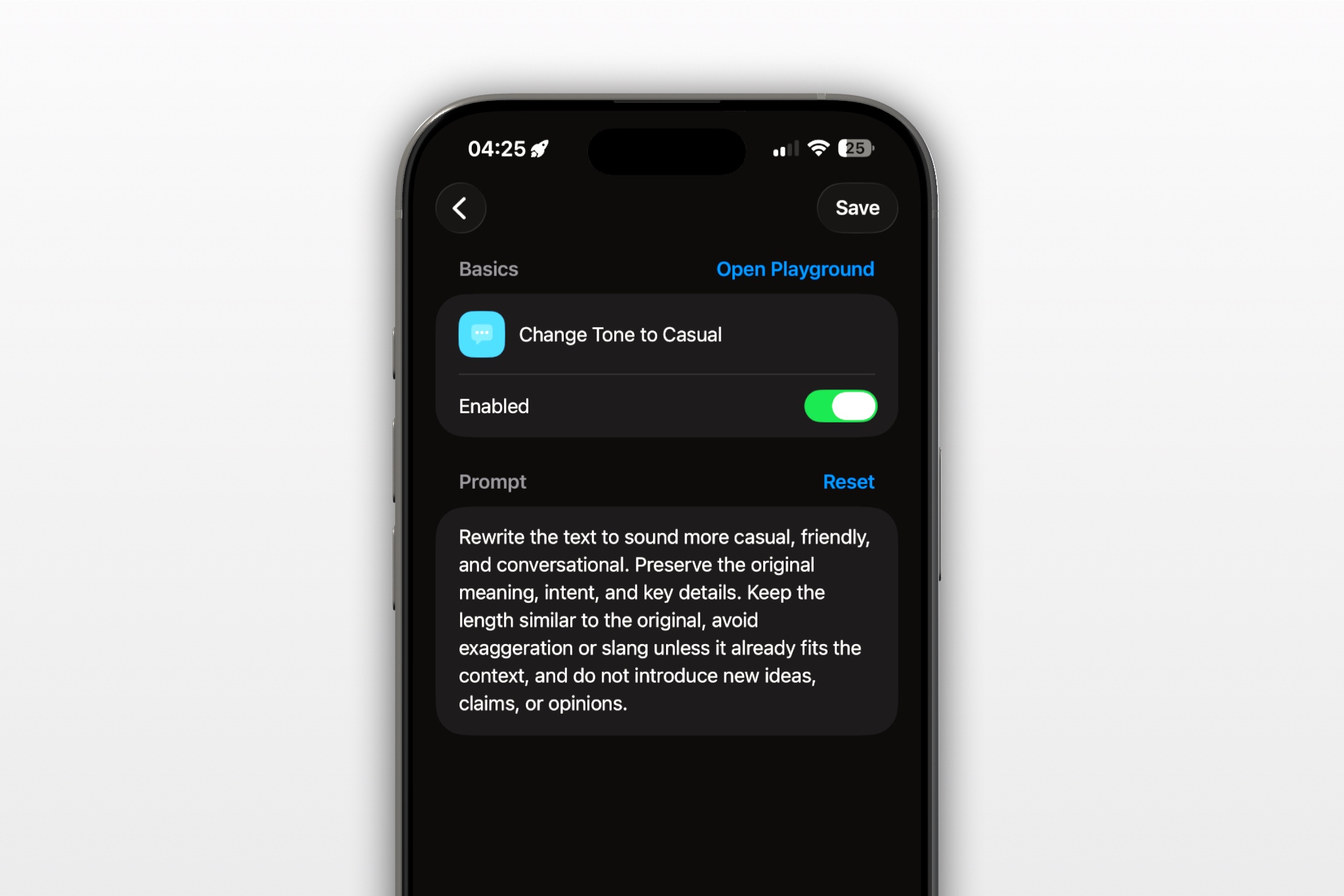
If you often rewrite support replies, you can adapt a custom command around your own approved process. Keep its boundaries explicit. For example:
Command name: Calm customer reply
Use when: You have a draft and want a concise, non-defensive tone review.
Prompt: “Rewrite the selected draft to sound calm, respectful, and specific. Preserve all verified facts and the original meaning. Do not invent a cause, refund, replacement, discount, deadline, policy, apology, or guarantee. Do not admit fault unless the draft explicitly says the company’s responsibility is confirmed. If a fact or next step is unclear, leave a bracketed note for me to verify instead of guessing.”
Try it first on a non-sensitive sample. The command can shape wording; it should not receive confidential customer information unless your organization permits that use and you have checked the relevant product and workplace policies. The RewriteMate custom-command screen illustrates where a reusable instruction fits in the drafting workflow; it does not replace your team’s approval process.
Mistakes that can make an angry-customer reply worse
- Copying a template without checking its promises. Some public examples include refunds, discounts, or guarantees. HubSpot’s template collection, for example, includes sample commitments; treat them as examples, not authorized policy for your organization.
- Replying point by point while emotions are high. First identify the central issue and the next useful action. You can address secondary details once you have the facts.
- Using a vague apology as the whole response. “Sorry for the inconvenience” does not tell the customer whether you understood the problem or what happens next.
- Over-explaining internal process. Share only the explanation that helps the customer understand the next step. Avoid making them parse internal jargon or blame between teams.
- Adding a deadline for reassurance. A false “today” or “within 24 hours” can undermine trust. State a timeframe only when it is confirmed and you can follow through.
- Letting tone tooling create certainty. AI can rewrite a sentence in a calmer voice while retaining or introducing an incorrect assertion. Re-check every material claim yourself.
FAQs
What is the best first sentence when a customer is angry?
Name the issue and its impact without arguing about the customer’s reaction. For example: “I understand why receiving two different delivery updates is frustrating.” Only use details the customer actually shared or you have verified.
Should I apologize if I do not know whether the company made a mistake?
You can acknowledge the frustration without asserting an unverified cause. Say what you are checking and what you will do next. If responsibility is confirmed, use a clear, proportionate apology consistent with your organization’s guidance.
How do I respond when a customer demands a refund?
Confirm the relevant facts and consult the current policy or an authorized reviewer. Do not promise a refund, credit, or exception before you know it is approved. If the decision is pending, state the real review step and avoid inventing a decision date.
How long should an angry-customer email be?
Long enough to acknowledge the specific issue, explain the verified next step, and set an accurate expectation; short enough that the customer can find that information quickly. There is no universal word count that fits every complaint.
Can an AI keyboard write customer-support replies for me?
An AI keyboard may help revise wording, proofread, or apply a tone instruction, depending on the product’s available features. It does not automatically know your customer history, policies, or authority. Verify all facts and follow your employer’s rules before sharing customer information or sending an AI-assisted draft.
What if the customer’s message is abusive or threatening?
Follow your workplace’s safety and escalation process, and involve a manager or appropriate team. You do not need to solve threats or harassment by finding a more polished sentence; use the channel and response boundaries your organization has established.
A calm reply is specific, honest, and actionable
When you respond to an angry customer, do not try to win an argument or make every feeling disappear in one message. Show that you understood the complaint, state only what you know, and make the next step concrete without promising what you cannot control.
If you draft customer replies on your iPhone, RewriteMate can help proofread or adjust the tone of text you provide. Use it as a writing aid, not a source of policy or customer facts: verify the final message before it leaves your keyboard.
Related articles
Keep reading

How to Reply to an Email Professionally From Your iPhone
Write clear, professional email replies from your iPhone with a simple structure, practical examples, and AI-assisted editing tips that keep your message accurate.

How to Apologize Professionally for a Mistake at Work
A professional apology names the mistake, owns its impact, and tells the other person what happens next. Use these practical structures and examples to respond clearly without overexplaining or making promises you cannot keep.

How to Tell a Client You Need More Time Professionally
A clear way to request more time from a client without making excuses, overpromising a new date, or leaving the next step unclear.

Felix Tran
RewriteMate Dev & Editorial Lead
Write about everyday workflows, systems that help ideas move faster, from first draft to finished work.