November 17, 2026
Invoice Discrepancy Email: Ask a Supplier to Correct a Bill
If a supplier’s invoice does not match the quote, order, or other record you have, send a short, factual note: identify the invoice, point to the exact line or total, state what your source says, and ask the supplier to confirm whether it will issue a corrected invoice. If you are not sure which record controls, describe the difference and ask for clarification instead of declaring the bill wrong.
The goal is to make the discrepancy easy to check—not to accuse the supplier, recalculate a complex bill from memory, or assume you have a right to withhold payment. The examples below are wording patterns, not accounting, tax, or legal advice. For UK VAT-registered businesses, HMRC says that when a supplier issues an invoice with the wrong amount to pay, the buyer should ask the supplier to correct it and issue a new invoice; that guidance is specifically about VAT records and does not decide every commercial or consumer dispute.1
Start with the record you can verify
Before writing, compare the invoice with the document or message you actually have. That might be an accepted quote, purchase order, order confirmation, contract, delivery record, or a written change. Don’t assume that an earlier estimate still applies if the scope, quantity, delivery, or agreed price changed later.
Write down four things:
- The invoice reference: number, date, and supplier name.
- The exact difference: a line item, quantity, rate, duplicate charge, or total that does not match.
- The comparison source: quote number, order, dated email, or other record.
- The next step you need: confirmation, an explanation, or a corrected document.
Use neutral language such as “I’m checking a difference” or “Could you confirm this line?” If you have verified the mismatch, state it directly but precisely: “The invoice lists 12 units; our order confirmation lists 10.” Avoid broad claims like “the whole invoice is wrong” when only one line is in question.
Match the request to what you know
- You can point to a clear mismatch: ask the supplier to review that line and confirm the correction.
- You see an unexplained charge: ask what it covers and which agreed record it relates to.
- The documents conflict: identify both records and ask which one the supplier is using.
- A change may have been agreed later: mention the later message or change order and ask for a reconciliation before requesting a replacement.
- You have not checked the arithmetic: describe the visible figures and ask the supplier to verify them; don’t label your own calculation as definitive.
This distinction helps the supplier investigate without turning an uncertain comparison into an accusation.
A concise invoice discrepancy email template
Subject: Invoice [invoice number] — question about [line item or amount]
Hello [supplier name],
I’m reviewing invoice [number], dated [date], for [order/project/reference]. It lists [brief description of the line or total]. The [quote/order/other record] dated [date or reference] shows [the corresponding detail].
Could you please check this difference and let me know whether the invoice should be corrected? If there is a later change or another record I should use, please point me to it.
Thank you,
[Your name]
Keep the request to one discrepancy if you can. If several lines differ, list each line separately with its invoice value and comparison value, and attach only the supporting document needed to check them. Before attaching anything, remove unrelated confidential details where practical and use the channel your organization normally approves for financial records.
The phrase “whether the invoice should be corrected” is useful when you are not certain that the earlier quote still governs. If the mismatch is confirmed, you can make the request more direct: “Could you send a corrected invoice showing [verified detail]?” Avoid adding a payment deadline, a promise to pay, or a statement that you will withhold payment unless that wording has been checked against your actual agreement and the applicable rules.
Examples for common invoice differences
These examples use fictional details. Replace every amount, date, reference, and comparison with information you have verified.
A line-item price differs from an accepted quote
I’m checking invoice INV-2047 for the Cedar Studio order. The materials line is listed at $480, while accepted quote Q-188 dated May 4 lists $430 for that line. Could you confirm whether a change was approved after the quote, or send a corrected invoice if the quote amount should apply?
This does not assume that the quote remained current. It gives the supplier a clear comparison and leaves room for a later approved change.
A quantity appears different from the order
Invoice INV-771 lists 24 replacement filters. Our order confirmation PO-516 lists 20. Could you check the quantity billed and let me know whether there is a delivery record or amendment I may have missed?
The question acknowledges that another record may explain the difference. If you have a signed delivery receipt or later amendment, include its date or reference rather than writing “you billed us for four extra units” as a conclusion.
A charge is unclear, but you cannot yet say it is incorrect
I’m reviewing invoice INV-390 and don’t recognize the $65 “service adjustment” line. Could you explain what it covers and identify the order or change request it relates to?
When the issue is lack of context, ask for context. Don’t request a credit or correction until you know whether the fee was agreed, already disclosed, or tied to a change.
The total does not match, but the line-by-line details do
First verify whether the invoice shows tax, shipping, a discount, or a deposit separately. If you still cannot reconcile it, ask the supplier to explain the calculation rather than supplying a replacement total from mental arithmetic. For an actual tax or bookkeeping treatment question, check with your finance lead, accountant, or the relevant tax authority.
What to attach—and what not to assume
Attach or quote the smallest relevant source: for example, the accepted quote page or order confirmation showing the disputed item. Keep the original invoice reference in the subject or message so the supplier can locate it. If you already discussed a change, refer to that date and ask whether the change is reflected in the invoice.
Don’t send account credentials, full payment-card details, or unrelated records just to make the email look complete. Follow your organization’s handling rules for purchase orders, invoices, customer information, and financial documents. If you are unsure what may be shared, ask your finance or procurement contact first.
Also avoid treating a template as a decision about whether to pay. An invoice error, a disagreement about what was delivered, a tax-record correction, and a disputed contractual charge may have different consequences. In the UK VAT context, HMRC separately explains how received VAT amounts may need replacement documentation; that is a specialized tax process, not a universal payment instruction.2
Turn the repeated writing step into a RewriteMate command
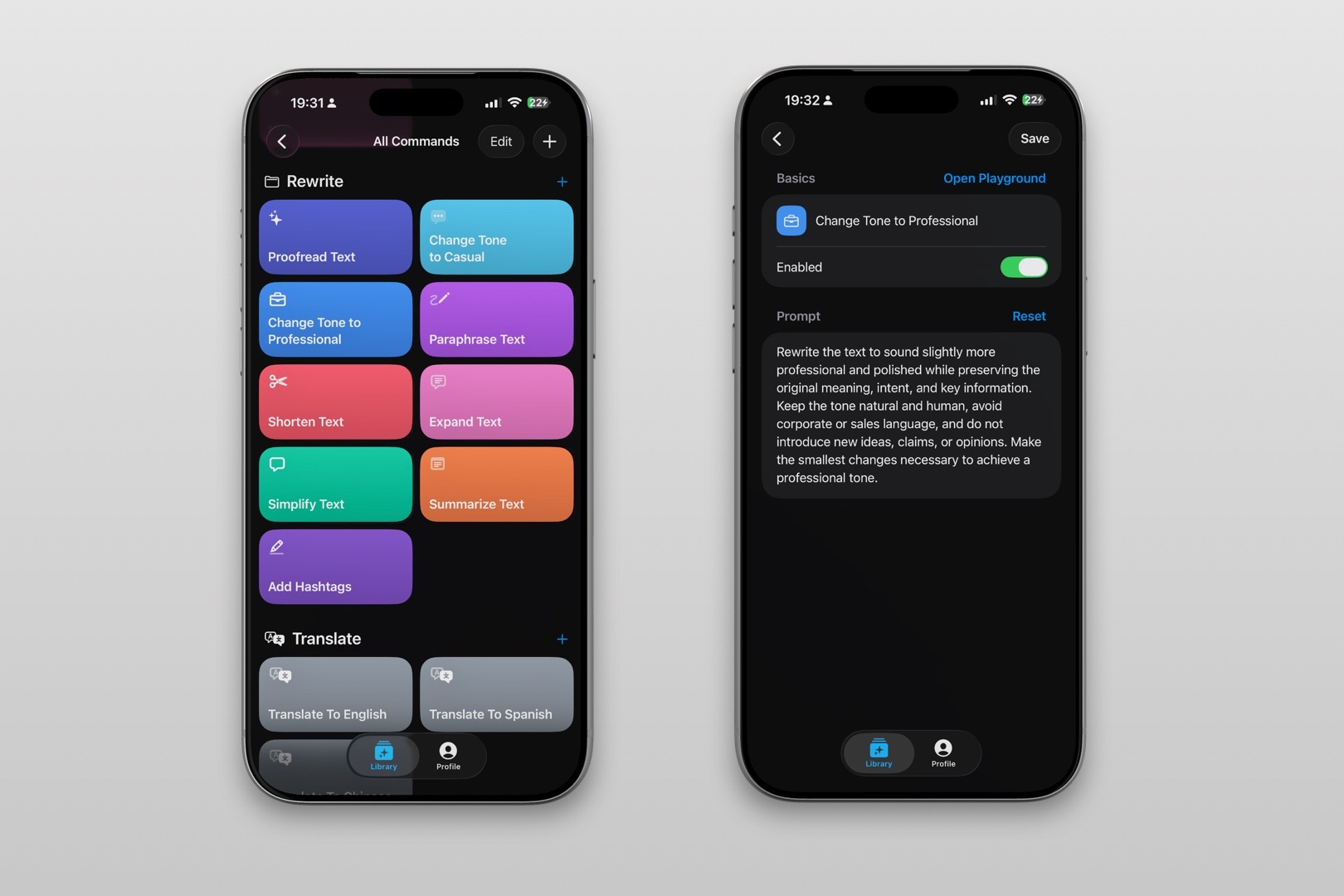
If you send this type of correction request regularly, RewriteMate’s custom commands let you save a user-written instruction as a keyboard shortcut; the product’s guide describes commands as saved instructions that appear in the keyboard.3 A command can help organize details you provide, but it cannot verify an invoice, check calculations, determine which contract applies, or decide a tax or payment question.
Command name: Check invoice difference
Suggested folder: Work or Finance
Output action: Copy for review, or Insert into a draft and inspect before sending.
Instruction to save:
Turn my notes into a brief, neutral supplier email about an invoice discrepancy. Use only facts explicitly present in my notes. Keep the invoice number, invoice date, supplier, line description, figures, currency, comparison document and its date/reference exactly as provided. State the observed difference without deciding who is at fault. If the source records conflict or a detail is missing, phrase it as a question. Ask the supplier to check the discrepancy and explain or confirm the correction process. Do not calculate totals, add a deadline, threaten nonpayment, claim a legal or tax right, promise payment, or invent an attachment. Preserve placeholders and flag missing information for me to fill in.
Example input and review
Notes (fictional): “Invoice S-204, 18 May; service line $320. Approved quote Q-18, 2 May; service line $300. No change note found.”
Possible draft: “Hello, I’m checking invoice S-204 dated 18 May. The service line is listed at $320; approved quote Q-18 dated 2 May lists $300, and I haven’t found a later change note. Could you check which amount should apply and let me know whether the invoice needs to be corrected?”
Treat the generated wording as a draft, not a verified result. Check that the quote was approved, that no later change exists, that the currency and figures are right, and that the request matches your organization’s process. If the amount is significant or the invoice affects a tax filing, ask a qualified finance or tax professional rather than relying on a wording command.
Before you send
- Re-open the invoice and comparison record; verify reference numbers, dates, units, currency, and the exact line.
- Separate a confirmed mismatch from a question you still need answered.
- Check whether a later approved change, delivery, discount, tax, or fee explains the difference.
- Ask for one next step: explanation, confirmation, or correction—not all possible remedies at once.
- Don’t make a payment, tax, contract, or legal decision from a writing template. Use your internal finance process and the relevant official or qualified adviser.
- Keep a copy of the message and response according to your normal records process.
For a different kind of billing message, see the guide to reminding a client about an overdue invoice; that article is about collecting a late payment, not correcting a bill you received. A damaged-item refund request is a buyer asking for a remedy for a product problem, which is another distinct situation.
Frequently asked questions
What should I say when a supplier’s invoice amount is wrong?
Identify the invoice, name the exact line or total, cite the record you compared it with, and ask the supplier to check it. If you have not confirmed which record is current, ask for clarification before calling the invoice incorrect.
Should I say “dispute” in the subject line?
Use a neutral subject such as “Invoice [number] — question about [line]” when you are asking for a review. Use formal dispute language only if your organization’s process or a qualified adviser says it is appropriate; the word itself may carry implications that vary by contract and jurisdiction.
Should I attach the quote or purchase order?
If your organization permits it, attach or quote the specific page or line that helps explain the difference. Avoid sending unrelated confidential information. For a sensitive financial record, follow your approved process or ask finance/procurement what to share.
Can I tell the supplier I will not pay until it is corrected?
This article cannot determine whether you may withhold payment. The answer can depend on the agreement, jurisdiction, invoice type, and circumstances. Check the applicable process with your finance lead, legal adviser, or other qualified source before making that statement or changing payment timing.
What if the invoice includes an incorrect VAT amount?
VAT invoice rules are jurisdiction-specific. HMRC’s instructions for UK VAT records say that an incorrect received VAT amount should be taken back to the supplier for a replacement invoice, but this does not substitute for advice about your own return or circumstances.2 Consult the relevant tax authority or a qualified accountant for your situation.
Can RewriteMate tell whether the invoice is actually wrong?
No. RewriteMate can help transform the notes you supply into a draft, but it does not establish which price was agreed, validate arithmetic, verify delivery, or decide tax or payment obligations. Check the source documents and all names, dates, numbers, currency, and commitments yourself before sending.
Footnotes
-
HMRC: Keeping VAT records — incorrect supplier invoices. The cited passage concerns UK VAT records and says to ask the supplier to correct an invoice with the wrong amount to pay and issue a new invoice. ↩
-
HMRC VAT Notice 700/45, section 3.3. This is UK VAT guidance for received invoices, not general commercial or consumer advice. ↩ ↩2
-
RewriteMate: Custom Command Recipes. The product guide describes custom commands as user-written instructions saved as keyboard shortcuts; the article makes no claim that commands verify invoice facts. ↩
Related articles
Keep reading

How to Remind a Client About an Overdue Invoice Without Sounding Rude
Use a calm, specific reminder to follow up on an overdue client invoice without apologizing for asking to be paid. Get adaptable email and short-message templates, plus checks to avoid inaccurate fees, dates, or promises.
Refund Request Email for a Damaged Item: What to Say
A damaged or incorrect order is frustrating, but a useful first message can stay simple: identify the purchase, describe what arrived, state the remedy you want, and ask one clear next-step question. Use the template and saved-command recipe to keep your request factual without inventing rights, policy, or a promised outcome.

Felix Tran
RewriteMate Dev & Editorial Lead
Write about everyday workflows, systems that help ideas move faster, from first draft to finished work.