November 10, 2026
How to Respond to Feedback at Work Without Getting Defensive
When feedback catches you off guard, start by showing that you heard the specific point—not by defending your character or agreeing to something you have not considered. A useful first reply can be as short as: “Thanks for telling me. I want to understand the example you mean. Could you walk me through what happened?” Then decide whether to acknowledge, clarify, disagree, or follow up after you have the details.
That approach is not a promise that every criticism is fair, accurate, or well delivered. It is a way to keep the first response focused on understanding while leaving room to assess the facts. The University of Windsor’s workplace toolkit recommends listening without interrupting, paraphrasing what you heard without implying agreement, and asking for examples when feedback is vague. Northwestern Human Resources offers similar staff guidance: listen, ask questions, restate the point, and return with more information if you still disagree.
Use a short first response before explaining yourself
When someone says, “Your updates are hard to follow,” it is tempting to answer with a defense: “I only had five minutes,” or “I already sent all of that.” Those statements may contain context, but they do not yet establish what the other person found unclear. Start with a neutral line that buys you room to understand:
“I hear that the updates haven’t been clear enough. Can you point me to one recent example so I can understand what was missing?”
Or, if you need time before responding fully:
“I want to think about this carefully rather than answer too quickly. I’ll come back to you after I’ve reviewed the example.”
You do not have to perform enthusiasm or say “You’re right” to sound professional. Acknowledging that you heard feedback is different from admitting fault or accepting every interpretation. The University of Windsor guidance makes that distinction explicitly: paraphrasing shows you understood the other person’s perspective; it does not mean you agree.
If the feedback is about an urgent task, you can still address the immediate work while reserving your broader response: “I’ll correct the missing figure in this version. I’d also like to understand the feedback about my process when we have a few minutes.” Keep the correction and the evaluation separate so the conversation does not become a debate over your intent.
Identify what kind of feedback you received
Before drafting a reply, sort the comment into one of three buckets. This is a practical decision aid, not a formal workplace framework.
Specific and actionable
The person names a situation and a behavior: “In Tuesday’s client summary, the delivery date was missing, so the team could not confirm the handoff.” You can reflect the point and check the next step:
“I understand—the Tuesday summary left out the delivery date, and that made the handoff unclear. I’ll include the confirmed date in the next one.”
Only commit to a change you can actually make. If the date was not confirmed, say so and ask who should confirm it; do not turn a useful correction into a promise based on unknown information.
Vague or broad
“Be more proactive,” “You need to communicate better,” or “You don’t seem engaged” may be meaningful to the speaker but are difficult to act on without an example. Ask for a recent instance and the expected behavior:
“Could you describe a recent moment when you wanted me to take more initiative? What would you have liked me to do differently?”
Another option is to check your interpretation: “When you say ‘more proactive,’ do you mean flagging risks earlier, proposing a next step, or something else?” That gives the other person choices without putting words in their mouth.
You do not agree, or the context is missing
Do not rebut every detail in the first sentence. First restate the concern in a way the other person can correct:
“It sounds like the main concern is that I changed the draft without checking with you first. Is that right?”
If you still see it differently, add your context as a specific observation rather than a judgment about the speaker:
“I see why the change looked unexpected. My understanding was that the earlier note approved the shorter version. I can pull that message up so we can compare what was agreed.”
The goal is not to win the exchange on the spot. It is to separate what happened, what was expected, and where the accounts differ.
Adapt the response to the situation
Feedback during a live conversation
Listen through the point before answering. If the person gives several examples, jot down short factual notes if appropriate: the task, date, behavior, and effect they described. Then summarize one point at a time: “Let me check I understood. The concern is that I raised the dependency after the review, not before it—is that the example?”
If you feel too surprised or upset to respond usefully, ask for a pause: “I’m taking this in. Can we pick this up later today after I’ve had a chance to review the details?” A pause should not be used to dodge an urgent decision; if there is an immediate work action, clarify that separately.
Feedback in a written message
Do not feel obliged to send a long defense from your phone. A concise holding reply can acknowledge the message and request a conversation:
“Thanks for raising this. I’d like to understand the example and expected change before I respond in detail. Would you have time to talk this afternoon?”
If a written reply is the right format, keep it to four parts: acknowledge the specific point, correct any concrete misunderstanding, say what you will do next (if anything), and ask one clear question. Avoid an all-purpose “Sorry for everything” or a paragraph-by-paragraph rebuttal before you know what resolution is needed.
Feedback that identifies a real mistake
If you confirm that you made the error, acknowledge the specific action, correct it if you can, and explain the prevention step only if you know one. For example: “You’re right—the latest file went out without the revised totals. I’ve sent the corrected version. I’ll use the approved source sheet for the next update.”
Do not invent an excuse or promise that the mistake can never happen again. If the error affects a customer, payment, safety decision, or formal record, follow the relevant workplace process and verify the correction with the appropriate owner. This guide is about wording, not incident, legal, or HR advice. For a separate apology structure, see how to apologize professionally for a mistake at work.
What to avoid in the first reply
- “That’s not what happened.” If the account is wrong, ask which event they mean and bring specific records or context once you have them.
- “I’m sorry you feel that way.” It can sound as though you are dismissing the substance. If you caused a specific problem, name that action; if you are unsure, ask what impact they observed.
- “I’ll fix it,” before you know what “it” is. Ask what change is expected and whether a deadline or owner is already agreed.
- A point-by-point rebuttal in chat. Written messages can flatten nuance. If the issue is complex, request a short conversation and send a concise recap afterward if that fits your workplace norms.
- Instant agreement just to end discomfort. You can say you understand the concern without agreeing with an interpretation that you have not checked.
- A counterattack. Avoid replying with a separate criticism of the other person before you have addressed the point they raised.
If feedback includes insults, threats, discriminatory remarks, retaliation, or another serious workplace concern, do not treat it as ordinary coaching or assume a polite rewrite will resolve it. Preserve relevant details and use the appropriate workplace channel, representative, or qualified adviser for your situation. This article cannot determine your rights, employer policy, or the best formal process.
A simple follow-up structure
After you have checked the facts, use this structure if a written follow-up will help:
- Restate the point: “You said the handoff note did not identify the next owner.”
- Clarify your view: “I checked the thread; I see the owner was named in the second message, but not in the handoff document.”
- Choose a next step: “I’ll add the owner to the document before the next handoff.”
- Ask about the open question: “Is there another field you need included?”
If you do not agree, do not disguise disagreement as acceptance: “I understand the concern. I’m not sure the example reflects the whole sequence, so I’d like to review the timeline together.” If you do agree, keep the commitment proportionate: “I can add the date to future summaries” is clearer than “I’ll communicate better.”
For language questions or a difficult point, you can also ask for a specific example: how to ask for clarification in English at work. If you need to explain a genuine difference of view after you understand the feedback, see how to disagree professionally in a Slack message.
Turn rough notes into a reply without changing the facts
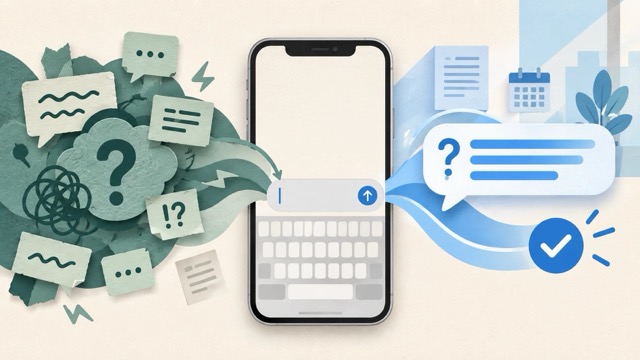
If you are composing from an iPhone, first jot down the feedback in neutral fragments: “Tuesday summary; date missing; reviewer could not confirm handoff; expected date field.” Then draft the response from those details. Keep opinion words (“careless,” “lazy,” “always”) separate from observable events, and do not add dates, agreements, apologies, or commitments that were not in the conversation.
RewriteMate’s custom commands let users save their own writing instructions as keyboard shortcuts. You could adapt a command for this task:
Turn my notes into a brief, calm response to workplace feedback. First acknowledge the specific concern. If the example or expected behavior is unclear, ask one neutral question. Do not invent facts, dates, motives, agreements, apologies, or promises. Do not imply that I agree unless my notes say I do. Keep my factual context and leave uncertain details as questions. Return one draft for me to review.
Use the result as a draft, not as a judgment about whether the feedback is fair or correct. Check every name, example, date, policy, and commitment; remove any sentence that overstates your agreement. A writing assistant can help shape words from details you provide, but it cannot know your workplace expectations or resolve a disagreement for you.
FAQs
What is a professional first response to negative feedback?
Try: “Thanks for raising this. Could you give me a recent example so I can understand what you’d like changed?” It acknowledges the point and asks for something actionable without forcing you to agree before you have the details.
How do I respond if I feel defensive?
Keep the first reply short. Restate the concern, ask one question, or request time to review the example before you answer in detail. Northwestern’s staff guide recommends listening, asking questions, restating what you heard, and returning with follow-up questions when needed; those are options, not a requirement to accept every criticism.
Do I have to agree with my manager’s feedback?
No. You can show that you understood the concern without agreeing with its interpretation. The University of Windsor toolkit makes this distinction directly. If you disagree after checking the details, explain your perspective with specific facts and ask to discuss the difference.
What if the feedback is too vague to act on?
Ask for a recent example and what a better outcome would look like: “Which part of the handoff was unclear, and what information would you want included next time?” If the answer is still unclear, restate what you think the expectation is and ask the person to confirm or correct it.
Should I respond to criticism by email or chat?
Use the channel your workplace normally uses and match the complexity of the issue. A short written acknowledgment can request a conversation; a complicated disagreement may need more context than a quick text can carry. There is no single channel that fits every workplace.
What if the feedback feels unfair or inappropriate?
Separate a disputed example from a serious conduct concern. For an ordinary disagreement, record the specific facts and request a follow-up discussion. If the interaction involves threats, discrimination, retaliation, or another serious concern, use the appropriate workplace process or seek qualified advice rather than relying on a template.
Can an AI writing tool make me sound less defensive?
It can help revise a draft toward a calmer tone, but it cannot decide whether the feedback is accurate or what you should concede. Supply only details you are comfortable using, then verify that the draft preserves your meaning and does not add an apology or commitment you did not intend.
Related articles
Keep reading

How to Apologize Professionally for a Mistake at Work
A professional apology names the mistake, owns its impact, and tells the other person what happens next. Use these practical structures and examples to respond clearly without overexplaining or making promises you cannot keep.
How to Ask for Clarification in English at Work
Ask for the missing detail in a work message without sounding uncertain or creating another round of confusion.

How to Disagree Professionally in a Slack Message (Without Sounding Dismissive)
Disagree with a coworker in Slack without turning a useful difference of opinion into a personal conflict. Use a clear message structure, practical examples, and a quick review checklist before you send.

Felix Tran
RewriteMate Dev & Editorial Lead
Write about everyday workflows, systems that help ideas move faster, from first draft to finished work.