
November 14, 2026
What to Say When a Coworker Takes Credit for Your Work
If a coworker presents work you contributed as theirs, correct the record with a short, verifiable statement: name the project, describe your contribution, and—if appropriate—credit theirs too. If you are not sure whether the omission was deliberate, begin with a neutral clarification rather than an accusation. If it happens repeatedly, keep a factual record and raise the pattern with your manager using examples.
The useful distinction is not “Was this person malicious?”—you may not know. It is “What can I verify, what needs correcting now, and has this happened before?” That keeps your response firm without making claims about someone else’s motive.
Choose a response based on what happened
Before you write or speak, separate the event into three parts:
- The observable moment: What was said, shown, or sent? For example, a presentation described a shared deliverable as one person’s work.
- Your contribution: Which part did you actually complete, review, or own? Be precise: “I built the first analysis” is clearer than “I did most of it.”
- The needed correction: Do you need the room to understand the split, a colleague to update a message, or a manager to understand a recurring pattern?
If it is a single unclear moment, clarify the contribution while the context is fresh. If correcting it publicly would derail a meeting, make a brief note and follow up privately. If the same omission recurs after you have clarified your role, use a manager conversation focused on the examples and the effect on your work—not on an unprovable motive.
This measured approach is consistent with SHRM’s advice to pause, consider whether the coworker may be unaware, and start with a constructive question before escalating a repeated problem. SHRM’s Ask HR guidance is a general workplace resource, not a ruling about your organization or a substitute for its policies.
What to say in the moment
Keep a public correction brief. You are clarifying the record, not trying to settle every question about recognition in front of the group.
When you want to add your part without disputing theirs
“I’m glad the analysis is useful. I put together the initial customer-segment review, and Jordan connected it to the launch plan.”
This works when both contributions are real and you want the room to understand the division. Replace the example with your actual task and the other person’s verified role. Do not add a contribution just to make the sentence sound balanced.
When the description leaves out your role
“One clarification: I drafted the first version of the proposal and ran the review with the design team. We then revised it together.”
“One clarification” signals that you are adding information rather than asserting why the omission happened. Name the artifact or task people can recognize. If you only reviewed the work, say that; do not use “led,” “owned,” or “created” unless those words accurately describe your role.
When the meeting is moving too fast
“I want to add one detail for the record: I handled the data cleanup and the first set of charts. I can send the notes after this meeting.”
Use this only if you can support the description and can follow through on the notes. If you are uncertain about exact ownership, say “I contributed to…” and verify the breakdown before sending a recap.
What to say privately afterward
A direct one-to-one message can help when you suspect a missed acknowledgment, the meeting is over, or a group correction would make the discussion harder. Ask about the specific moment and state what you want next.
“Hi [name]—in today’s review, the [deliverable] came up as your work. I built [specific part] and shared it on [date/channel]. Did I miss a context update? For the next recap, could you include that contribution?”
The question gives the other person room to explain without assuming intent. The request is concrete: include the contribution in the next recap. If the explanation resolves the confusion, thank them and move on. If the conversation becomes tense, avoid arguing over character; return to the deliverable, your role, and the correction you need.
For a simpler omission, a shorter note may be enough:
“I noticed the summary didn’t mention my work on [specific part]. Could we update it to show that I [specific contribution]?”
Avoid language like “You always steal my ideas” unless you are prepared to substantiate a repeated pattern and have chosen an appropriate formal route. Absolute claims are easy to dispute and can distract from the specific correction you need.
If the same thing happens again
Repeated omissions deserve a more structured response. Keep a private, factual timeline with the date, the project or deliverable, what was communicated, your contribution, and any follow-up. Save only records you are authorized to retain under your workplace’s rules. Do not forward confidential files to a personal account or include sensitive company information in an AI writing tool.
Then ask for a meeting with your manager. You can say:
“I’d like your help making project contributions clear. On [date], the [deliverable] was presented without my role in [specific task]. I raised it with [person] on [date]. A similar gap happened on [date] with [second example]. I’m not asking you to infer intent; I’d like us to agree on how contributions are recorded in future updates.”
This framing makes three things easy to evaluate: the examples, the step you already took, and the process change you want. SHRM recommends that if the problem continues, an employee bring the contribution issue to a manager in a factual way rather than making the conversation a general complaint about the coworker. Your organization may have a different reporting path, so follow its current procedures when the situation involves retaliation, discrimination, harassment, or a formal dispute.
A simple record format
| Date and context | Observable statement or action | Your verified contribution | Correction or next step |
|---|---|---|---|
| [Date], project review | [What the recap or speaker said] | [Task you completed; link or record if appropriate] | [Asked to update recap / requested manager guidance] |
Write what happened, not a diagnosis of why. “The recap credited the analysis to Alex; I had sent the initial analysis in the project channel on Tuesday” is more useful than “Alex deliberately took my work.” Keep the record proportionate and follow company record-retention and confidentiality rules.
Common mistakes that weaken a correction
- Accusing before checking: An omitted acknowledgment can be a misunderstanding, an incomplete recap, or part of a pattern. Start with the known event.
- Overstating your role: Separate “drafted,” “reviewed,” “analyzed,” “coordinated,” and “approved.” Accurate verbs help others understand the actual work split.
- Turning the correction into a contest: A concise addition is usually easier for a team to act on than a long argument over who deserves more praise.
- Waiting indefinitely to correct a material record: If a meeting summary or decision document affects ownership, evaluation, or next steps, ask for a correction while the details are still clear.
- Retaliating by withholding routine collaboration: That can obscure the original issue. Set reasonable boundaries through the manager or agreed team process instead.
- Sending while angry: Draft the message, remove guesses and absolutes, then reread it for factual accuracy and the one outcome you want.
Indeed’s updated career guidance also recommends taking time to respond and provides examples of tactful corrections. Treat its examples as starting points, not scripts you must use; the right wording depends on your role, the work, and workplace norms. Indeed’s response guide was updated June 16, 2026.
A reusable RewriteMate command for fact-first wording
If you often draft difficult work messages from your phone, a saved instruction can help keep the wording focused. RewriteMate’s official Custom Command Recipes describes custom commands as user-saved writing instructions available as keyboard shortcuts. The tool can help transform text; it cannot verify who did the work or decide what your workplace record should say.
Try this command with a non-confidential draft:
Command name: Clarify My Contribution
Folder: Work
Instruction:
Rewrite this draft as a concise, calm workplace message. Preserve every supplied name, date, project detail, contribution, and request exactly. Do not add facts, assign motives, exaggerate ownership, promise an outcome, or invent company policy. Keep the message under 100 words. If a key fact or desired next step is missing, ask me to fill it in instead of guessing.
Use the command on text you are allowed to share. Before using the result, compare it with your source notes. Confirm the contribution verbs, dates, names, links, and requested action. If the issue is sensitive or part of a formal process, do not paste confidential or identifying information into an AI tool unless your organization authorizes that use.
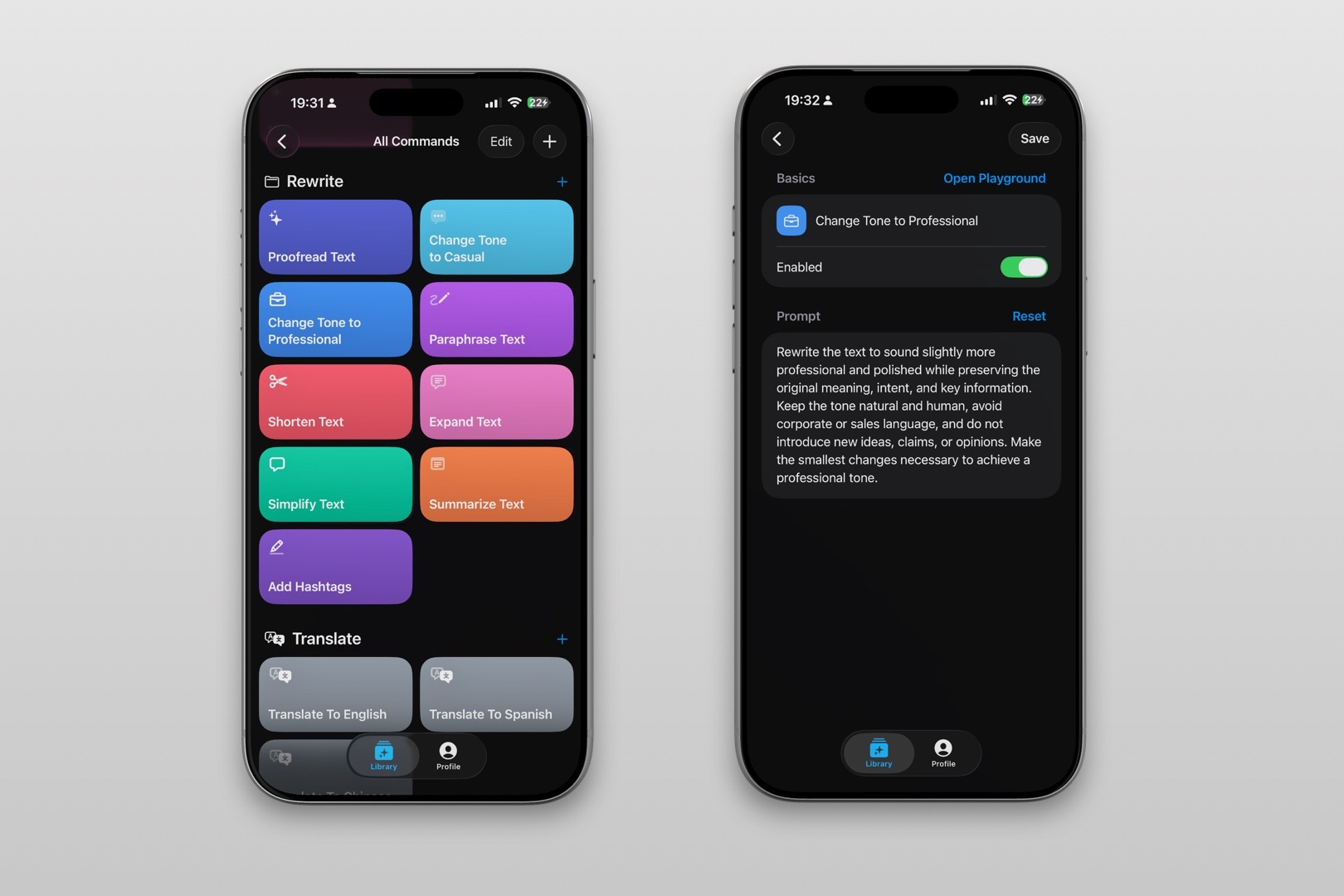
The command can help make wording more concise; it cannot determine authorship, judge intent, guarantee a manager’s response, or replace your organization’s reporting process. If a draft changes what you actually did, discard that version and correct the source facts yourself.
Before you send: a five-point check
Read the message once for tone and once for facts:
- Names: Are colleagues and stakeholders named correctly, and are they necessary to the message?
- Dates and records: Do dates, meeting names, and links match what you can verify?
- Contribution: Does each verb accurately describe what you did—no more and no less?
- Intent: Have you removed claims about what someone meant unless you have direct evidence?
- Request: Is the next step specific, such as correcting a recap, including your role next time, or agreeing on a contribution-recording process?
For employment, retaliation, discrimination, harassment, or legal questions, this article is general communication guidance, not legal advice. Consult your organization’s official policy, an appropriate HR or employee-relations contact, or a qualified adviser for your circumstances. If there is an immediate safety concern, use the official reporting channel available to you.
FAQs
Should I correct my coworker in front of everyone?
If a brief factual correction fits naturally and the information matters to the meeting, you can add your contribution calmly. If the group setting is likely to derail the discussion or the facts are unclear, make a note and follow up privately. The goal is an accurate record, not a public confrontation.
What if I am not sure they meant to take credit?
Do not state a motive you cannot verify. Describe the event and ask a neutral question, such as, “I noticed the recap didn’t mention my part in [task]. Was that an oversight?” Then make a clear request for how to handle future updates.
What if my coworker denies it?
Do not escalate the argument by repeating accusations. Restate the specific work you completed and the record you can verify, then ask for the correction or process change you need. If the issue is repeated or materially affects your work, share the examples with your manager or the designated workplace contact.
Should I copy my manager on the first message?
There is no universal rule. For a one-time, low-stakes omission, a direct private clarification may be enough. Involve a manager sooner if your workplace process requires it, the record affects a consequential decision, you have already tried a direct correction, or you have a safety or retaliation concern.
How can I document the pattern without making it personal?
Record dates, the specific communication or deliverable, your verifiable contribution, and the correction you requested. Avoid speculation about intent and follow company confidentiality and retention rules. Keep documentation relevant rather than collecting unrelated material.
Can RewriteMate decide whether someone took credit?
No. RewriteMate can help draft or transform your wording, but it cannot verify authorship or determine intent. Supply only information you are authorized to use, review every factual detail, and make the final decision yourself.
Related articles
Keep reading

How to Disagree Professionally in a Slack Message (Without Sounding Dismissive)
Disagree with a coworker in Slack without turning a useful difference of opinion into a personal conflict. Use a clear message structure, practical examples, and a quick review checklist before you send.
How to Respond to Feedback at Work Without Getting Defensive
A calm response to workplace feedback does not require instant agreement. Use a short acknowledgment, ask for a concrete example when needed, and decide what to accept or clarify after you understand the point.

How to Write a Project Handoff Message With a Clear Next Owner
A practical project handoff message should name the incoming owner, state what is verified, show the next action, flag open questions, and point to the source of truth. Use this concise template to transfer work without leaving the next person to reconstruct the context.

Felix Tran
RewriteMate Dev & Editorial Lead
Write about everyday workflows, systems that help ideas move faster, from first draft to finished work.